Department Events
Expert lecture on “Engineering Project Guidance” on 04/08/2023
An
Expert lecture has been
arranged by IET On-Campus of the electrical department on “Engineering Project Guidance" BE Electrical Division: A and
B students and staff of the department
on 04/08/2023: Resource Person: “Mr. John Yesuraj” General Manager (R&D-Retired), CG Power and Industrial Solution
Ltd., Nashik, India. Total No. of
Students present = 105. This lecture helped students to acquire knowledge regarding
project implementation.
What should be the content of the project report, and how to write a
project report?
It helps students to select the topic of the project and how
to implement it.
The concept of a prototype project is cleared and how to start the
project was discussed in the lecture.

Expert lecture on “Project to Product and then Product to Start-up: A Case Study” on 10/08/2023
An
Expert lecture has been
arranged in association with the Institution’s Innovation Council and
AICTE IDEA Lab on “Project to
Product and then Product to Start-up: A Case Study” BE Electrical Division: A students and staff of the department
on 10/08/2023. Resource Person: “Dr. Gayatri
Phade” Mentor, SANDIP TBI, Nashik Total No. of Students present = 77. This lecture helped students to
acquire knowledge regarding the importance of projects and research in
engineering education.
Also helped students to develop the mindset for solving
complex engineering problems, and identify areas where the project can be
developed in the electrical field. The discussion was also about the
product and how that product can be a start-up.

Department of has conducted an Online Panel Discussion on ‘Basics of Vacuum Interrupters and the ISDEIV Symposium’ on 18/08/2023
An Expert lecture has been arranged in Association with the IEEE Students Chapter by the Electrical Department in online mode on “Basics of Vacuum Interrupters and the ISDEIV Symposium” BE Electrical Division: A and B and TE A and B students and staff of the department on 18/08/2023. Resource Person: “Shri. Sandeep Kulkarni” General Manager, Schneider Electric, Bangalore. Total No. of Students present = 129. This lecture helped students to understand what is switchgear and in detail, vacuum switchgear, how to vacuum interrupter interrupts the current, basic vacuum switch gear, and how to select the range of interrupter. Sir also discussed the opportunities in switchgear companies for electrical engineers.


Career Guidance Program
The department has organized a program called “Career pe
Charcha” - Reflection on a career you love and follow with passion with
Project Management Institute Mumbai Chapter. The session has panellist Dr
Vinay Wandrekar CISA CISSP CISM and Dr Roopali Srivastava for
guiding young minds and Rajendra Bhatt Raveen Chugani Priya Patra - our
outreach volunteer tea, for making this happen.

World Entrepreneur Day
A session is organized on ‘Introduction to Start-up and Entrepreneurship’ on the occasion of World Entrepreneur Day by Mr Raja Sekhar Malapati for TE students. He is a serial Entrepreneur. In the session, he delved into the innovative nature of start-ups and the exciting world of entrepreneurship.

Parent Meeting on 19/08/2023
The Department conducted a Parent Meeting on 19th August 2023 for the parents of Third Year and Final Year students to inform them of the teaching-learning process, In-semester examination and further department plans. Around 30 parents attended the meeting.

Faculty Development Program on ‘Pedagogy in Curriculum Delivery’ on 21/08/2023
The
Department has conducted a Faculty Development Program on ‘Pedagogy in
Curriculum Delivery’ from 21st August 2023 to 25th August 2023 for the
internal faculty members of the department for F.Y. B. Tech and S. Y. B. Tech
courses to be delivered in Semester I of Academic Year 2023-24.


Student Corner
Students Industry Visit on 23/08/2023
Third Year Students (Div B) visited the 132/33 kV Takli Sub-Station as a part of an academic-industry visit with Prof. Pooja Sapkade and Ms Jayashree Ghumre on 23rd August 2023.

Students Industry Visit on 24/08/2023
Third Year Students (Div A) visited the 132/33 kV Takli Sub-Station as a part of an academic-industry visit with Prof. Rupali Ahire and Prof. Merin John on 24th August 2023.

Congratulations!
Institute's Team
Nikola Racing has received 1st Prize of Rs. 75000/- for the overall performance
Award at the National level SAEISS Dr. G. Padmanabham Memorial Electric Two-Wheeler
Competition 2023 conducted at Chennai. Another award is the Best Design Award
3rd Prize. A photograph with Hon. Chairman Shri. Sameer Wagh (K. K. Wagh
Education Society)

Congratulations!
Team Brahmastra Racing of the institute has secured the All India Rank 1 in the 9th Quad Torc held from 3 - 7 Aug 2023 at Sagar Institute of Science Technology and Research, Bhopal, Madhya Pradesh. The students from the Electrical Department are Shraddha Dipak Tiwari (TE) and Aditya Waghaskar (FY). Shraddha Dipak Tiwari is also felicitated for the best female participation in the event. Congratulations to all the students.

Congratulations!
A student from BE (Electrical), Gaurav Mistry,
participated in the debate competition conducted by the Institute on National
Education Policy 2020. He got 2nd Prize. Congratulations to him. Prof.
Sachin Kakde participated as faculty in this competition.

Congratulations!
Three
students from the Institute participated in the Regional West (Mumbai) Round of
the IET India Scholarship Award 2023 held at St Xavier Institute of
Engineering, Mahim, Mumbai on 12th August 2023. These are as follows.
1. Arya Patil
(E&TC)
2. Tejas Rayate
(Electrical)
3. Isha Patil
(Civil)
In this, Isha Patil has been recognized as Regional Runner-up West for providing innovative solutions in Engineering and Technology. She has been awarded the prize of Rs. 40000/-, a Certificate and the IET Membership. Congratulations to all of them

Congratulations!
Congratulations to Team Electrical for Winning the Karmaveer Premier League (KPL) 2023

Student Publication
Aditya Mr
Shelke; Devang Vyas; Abhishek Srivastav “Comparative Study for Deep Deterministic
Policy Gradient and Soft Actor-Critic using an Inverted Pendulum System” Organized
by: Drone Research Centre, IIT Roorkee, in Collaboration with IEEE Roorkee
Subsection and IEEE Uttar Pradesh GRSS Chapter at Indian Institute of
Technology Roorkee, Roorkee, Uttarakhand, INDIA during 26th-27th August 2023.

Alumni Felicitation
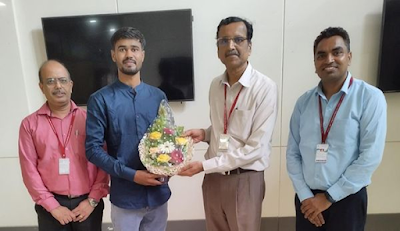
Felicitation of Mr Roshan Balasaheb Tarle (Gold Medalist and University Topper) in the presence of Hon. Sameer Wagh (President, K. K. Wagh Education Society), Dr. K. N. Nandurkar (Principal), Dr. Ajinkya Joshi (Registrar) and Department faculty members.


Faculty Corner
Industry collaboration
The department team visited Borse Automotives Pvt. Ltd.
to explore possibilities of collaboration. They were impressed by the advanced
technology and innovative ideas being implemented at the company. The team at
Borse Automotives was also very welcoming and open to collaboration. The
faculty members are excited to see what the future holds for this partnership
and how it can benefit both the company and the academic community.

Industry collaboration
Industry visits by the department faculty members to CG
Power and Industrial Solutions, Ahmednagar to interact with Alumni
and Industry professionals for collaboration on 9th August 2023. The visit was
attended by Dr. Ravindra Munje, Prof. Saravanan S along with Dr.
P. J. Pawar (HOD, Robotics and Automation), Dr. P. K. Shahabadkar
(T&P Officer) and Prof. Gokul Jadhav.

Industry collaboration
Industry visits by the department faculty members to Crompton Greaves Consumer Electricals Limited, Ahmadnagar to interact with Industry professionals for collaboration on 9th August 2023. The visit was attended by Dr. Ravindra Munje, Prof. Saravanan along with Dr. P. J. Pawar (HOD, Robotics and Automation), Dr. P. K. Shahabadkar (T&P Officer) and Prof. Gokul Jadhav.

Alumni Interaction
Interaction of Mr. Roshan Balasaheb Tarle (Gold Medalist and University Topper, 2021 batch) with final year students for preparation for the competitive exam was arranged in the department.

Student Articles
Superconducting Generators for Offshore Wind Turbines
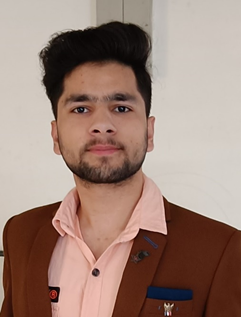
Riyan
Bashir
TE-A-Electrical
Engineering
riyanbashir57@gmail.com
1. INTRODUCTION
A superconducting generator for
offshore wind turbines is a promising technology that can increase energy
efficiency and reduce the size and weight of the generator. Superconducting
materials, when cooled to extremely low temperatures, exhibit zero electrical
resistance, which can significantly reduce energy losses in the generator Superconducting elements are the most important part of
electromechanical systems because of their functioning and these systems form
the superconducting electric machines. The lack of DC resistance in superconductors
contributes much to its greater efficiency. Superconductors
are used in particle accelerators, generators, transportation, computing,
electric motors, medical, power transmission, etc. Superconductors are primarily
employed for creating powerful electromagnets in MRI scanners
1.1
How it works:
Superconducting
Materials: High-temperature superconductors (HTS) or low-temperature
superconductors (LTS) are used in the construction of the generator.
Cryogenic Cooling:
The superconducting materials require cryogenic cooling to maintain their
superconducting state. Liquid nitrogen or helium is commonly used for this
purpose.
Improved
Efficiency: The absence of electrical resistance in superconductors allows the
generator to operate at higher efficiency levels, converting a larger portion
of wind energy into electricity.
Compact Design:
Superconducting generators can be more compact and lighter than traditional
generators, making them suitable for offshore installations where space and
weight constraints are crucial.
Cost
Considerations: While superconducting generators offer advantages in terms of
efficiency and size, the cost of cooling systems and superconducting materials
can be a significant factor.
Research and
Development: Researchers are continually improving the efficiency
and cost-effectiveness of superconducting generators for offshore wind
turbines.
Overall,
superconducting generators have the potential to enhance the performance of
offshore wind turbines, but their widespread adoption depends on advancements
in technology and cost reduction.
1.2
Onshore vs Offshore Wind:
Onshore Wind

Offshore Wind

Figure 1.1: Onshore wind, and Offshore wind
Onshore wind economics are driven by turbine cost and Offshore wind economics are driven by O&M and infrastructure costs.
1.3 Why Turbine Size Matters in Offshore Wind:


Figure 1.2: Graphical Chart of
offshore wind
1.4 Superconductors
• Temperature,
current density, and temperature determine conductivity:
• Under the
critical surface conductor is superconducting with no DC loss
• Outside the
critical surface conductor is normally conducting with resistive loss
• NbTi is the
superconducting wire used for MRI machines; it is commercially available in
adequate quantities and at acceptable cost
• NbTi is a low-temperature
superconductor
• High-temperature
superconductors exist but are not appropriate for a commercial generator

Figure
1.3: Temperature Level of Semiconductors
1.5 Keeping
the Superconductors Cold:
• Use vacuum as
thermal insulation to prevent thermal conduction
• Limit radiation
heat transfer using emissivity control
• Limit thermal conduction through the torque-reacting structure


Figure 1.4 : Superconductors temperatuire level
1.6 Superconducting
Generators
Superconducting
generators are electrical generators that incorporate superconducting materials
into their design to achieve enhanced performance and efficiency. The key
feature of superconducting generators is the use of superconducting wires or
coils in the generator's windings. These wires or coils are cooled to extremely
low temperatures, allowing them to operate in a superconducting state with zero
electrical resistance. Superconducting materials have the unique property of
conducting electricity without any resistance. This property eliminates energy
losses due to electrical resistance, resulting in higher generator efficiency. Superconducting
generators can be more compact and lighter than conventional generators because
they require fewer materials and can operate at higher power densities. The
absence of electrical resistance means that superconducting generators can
convert a larger portion of the mechanical energy (e.g., from wind turbines)
into electrical energy, improving overall efficiency.
Superconducting materials must be cooled to very low temperatures to maintain their superconducting state. Liquid nitrogen or helium is often used for cryogenic cooling. Superconducting generators are of interest in various applications, including wind turbines, where they can help increase the efficiency of electricity generation. They are also considered for use in high-speed trains, ships, and other forms of transportation. Superconducting generators have the potential to play a crucial role in the transition to more efficient and sustainable energy systems, especially in applications where compact and lightweight generators are essential.
1.7 Superconducting Generators
• The field is stationary to
eliminate a rotating cryogenic coupling
• The armature rotates, power is
passed to the stationary frame through brushes, slip rings
• Armature windings are integral
slots to reduce losses in cold regions where it is expensive to reject heat
• The field leverages developments
in superconducting magnets for MRI

Figure 1.6: Circuit Diagram of Superconducting Generators
1.8 Implementation
Challenges
• Design
• Structural support of field coils
• Minimization of heat entering low-temperature
zones
• Manufacturing
• Large, thin cylindrical shells
• Precision winding of racetrack
field coils
• Assembly
• Nesting of temperature zones within field assembly
2. Conclusion
One can thus conclude that
superconducting machines have retained industrial interest for decades, though
no commercialization has occurred yet. Additionally, the future of
superconducting machines is unknown, but they might be a feasible alternative
for very large 10MW offshore wind turbines. It is however still being determined whether the
future generators will converge towards only one superconducting technology or
whether all three alternatives: LTS, HTS and MgB2 will be seen in the future.


