Friday, December 8, 2023

e-Newsletter - October 2023

Department Events

Expert lecture on ‘Start-up and Innovation’ on 07/10/2023

An Expert lecture has been arranged in Association with the IEEE Students Chapter by the Electrical Department on “Start-up and Innovation” for TE A and B students and staff of the department on 07/10/2023. Resource Person: Mr. Ranjit VarpeCEO, Suprabha Polymers and Engineers.  Total No. of Students present = 109. This lecture helped students to understand establishing a start-up, making it operational, etc. Mr. Ranjit Varpe also shared his experience while starting the start-up and the problems and struggles during the initial stage.


Expert lecture on “Energy conservation and Management” on 21/10/2023

The Electrical department has organized an Expert lecture in Association with EFFECT Students Body Expert Lecture on “Energy Conservation and Management “for FE Electrical Division: N and students and staff of the department on 21/10/2023: Resource Person:  “Mr. Pramod DasputeDeputy Executive Engineer, MSETCL. Total No. of students present = 77. This lecture helped students to acquire knowledge of the application of Energy Conservation and Management in daily practices. Energy conservation methods and basic concepts of energy management were discussed.


Expert Lecture on “Overview of Motor Control Drive” on 28/10/2023

Department of Electrical Engineering in Association with IET On-Campus organized an online Expert Lecture on “Overview of Motor Control Drive” for BE Electrical Division: A and B students and staff of the department on 28/10/2023.Resource Person: “Dr. Sushant PawarTechnical Lead for KPIT Technologies. Total No. of Students present = 90. This lecture helped students to get knowledge about the motor control drive. The expert also discussed the basics of permanent magnet synchronous motors, an overview of the electric drive system, and the types of motors used in traction applications.

Expert Lecture on “Innovations in Control Systems” on 26/10/2023

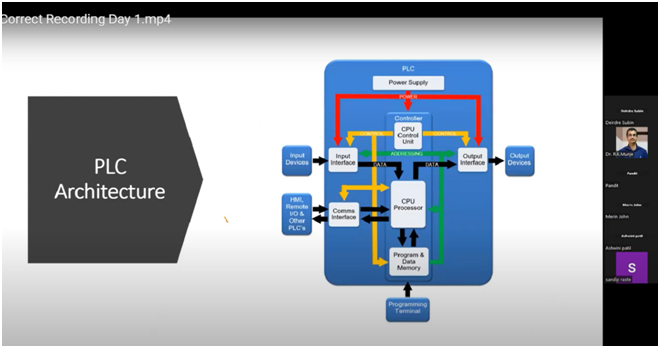
Department of Electrical Engineering in Association with IET On-Campus Organizes Online Expert Lecture onInnovations in Control Systems” for BE Electrical Division: A and B students and staff of the department on 26/10/2023.Resource Person:  “Ms. Deirdre Denise SubinSenior Technical Engineer Electrical Control Systems in Sydney Trains, Australia. Total No. of Students present = 99. This lecture helped students to get knowledge about the control system and innovations in the control system. The basics of the control system and new trends in the control system were discussed.


Faculty Development Program (FDP) on ‘Advanced Topics in Control Systems’ on 26th – 28th October 2023.

The department in association with IET Nashik Local Network has successfully conducted an International Faculty Development Program (FDP) on 'Advanced Topics in Control Systems' in online mode from 26th – 28th October 2023. Around 84 participants attended this FDP. Speakers were 

1. Deirdre Denise Subin, Senior Technical Engineer - Electrical Control Systems in Sydney Trains, Australia

2. Dr. Anupam Kumar, National Institute of Technology Patna, Bihar

3. Dr. Shayok Mukhopadhyay, University of New Haven, USA

4. Dr. Karam Eliker and Dr. Shouvik Chaudhuri, Postdoctoral Fellow, University of Southern Denmark

5. Dr.Sushant Pawar, Technical Lead for KPIT Technologies

6. Dr. Rahul Radhakrishnan, National Institute of Technology Calicut


Certificate Course on ‘PLC and SCADA’ on 3/10/2023

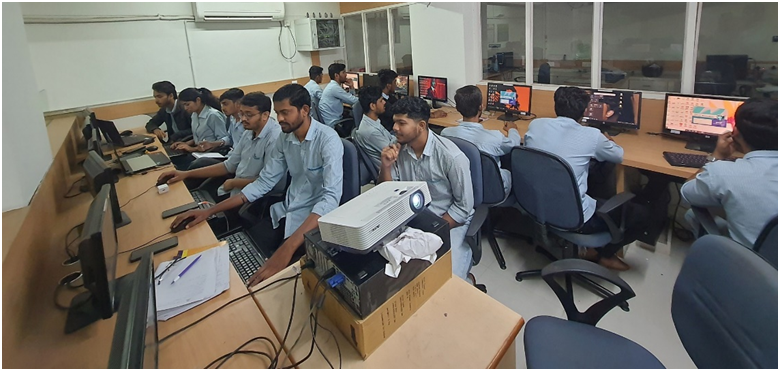
The Department has conducted the Certificate Course on ‘PLC and SCADA’ for BE (Div. A) students from 3rdOctober to 7thOctober 2023.


30 Hours Certificate Course on ‘Application of MATLAB/SIMULINK in Electrical Engineering’

Department of Electrical Engineering, K. K. Wagh Institute of Engineering Education and Research (KKWIEER) has organized a 30-hour certificate course on ‘Application of MATLAB/SIMULINK in Electrical Engineering’ from 26th October 2023 to 30th October 2023. This 30-hour course was delivered by Prof. Ganesh Jadhav, Prof. Merin John, Prof. Alok Kumar, Prof. S. Saravanan, and Dr. Abhishek Srivastava, Department of Electrical Engineering, KKWIEER. The topics covered in this course include the basics of MATLAB, programming with MATLAB, modelling and control of electrical motors, converter design, and power quality improvement using FACTS. This course was open for all the students of electrical engineering with a limited seat of 40. However, around 41 students attended this program. The course was coordinated by Dr. Abhishek Srivastava.


Student Corner

Student Placement

The following students are placed in various multinational companies. Congratulations to all the students!

Placed Students Details (October - 2023)

Sr. No.

Name of the Student

Placement Date

1.

Shah Tulsi Kalpesh

07/10/2023

2.

Kalyankar Umesh Namdevrao

07/10/2023

3.

Dhikale Prathamesh Nandram

10/10/2023

4.

Kulkarni Hrushikesh Ajay

10/10/2023


Industrial Visit on 12/10/2023

The department has organized the Industrial Visit of F.Y. B.Tech. Students ( Div. O) at Lucy Electric India Pvt Ltd. MIDC Ambad on on 12th October 2023. The visit was coordinated by Prof. J. D. Patil and Ms. Jayashree Ghumare.


Industrial Visit on 13/10/2023

The department has organized the Industrial Visit of F.Y. B.Tech. Students (Div. N) at Lucy Electric India Pvt Ltd. MIDC Ambad on 13th October 2023. The visit was coordinated by Prof. Ashwini Khaire and Ms. Jayashree Ghumre.


Industrial Visit on 17/10/2023

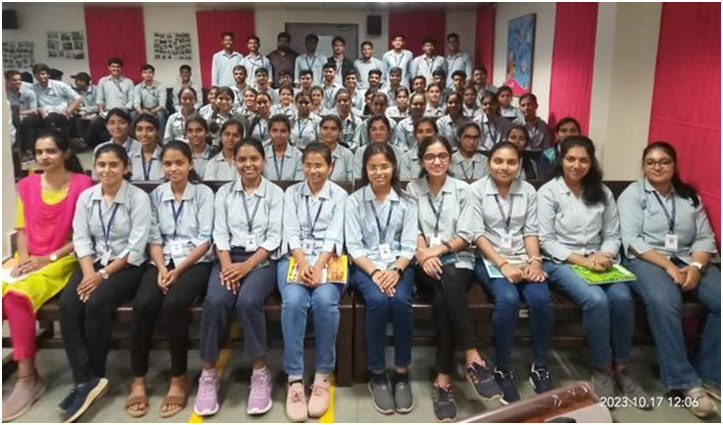
The department has arranged an industrial visit for BE (Div. A and B) students on 17thOctober 2023 at Parle Biscuits Pvt. Ltd. to understand the processes and automation. The visit was coordinated by Dr. Ravindra Munje, Dr. Abhishek Srivastava and Ms. Ashwini Patil.


Industrial Visit on 27/10/2023

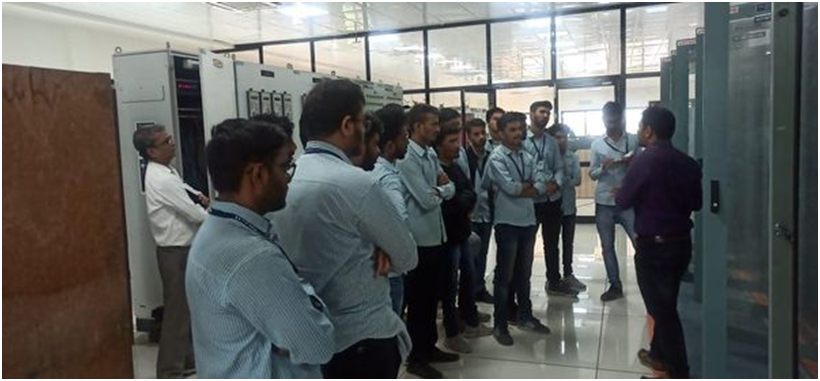
The department has organized the Industrial Visit to the 400kV substation at Babhaleshwar for final-year students on 27th October 2023. The visit was coordinated by Dr. Sharad Dhamal, Prof Prajkta Dhole and Mrs. Shubhada Borade.


Industrial Visit on 30/10/2023

The department has organized the Industrial Visit to the 400kV substation at Babhaleshwar for final year students (Div. B) on 30th October 2023. The visit was coordinated by Prof. Atul Shewale.


Parents Meeting of F.Y. B. Tech on 31/10/2023

The department conducted the Parents Meet for the Parents of F.Y. B. Tech students on 31st October 2023.


During this meeting, the following three students of S.Y. B.Tech (Electrical) are felicitated for achieving the top position in the F.Y. B.Tech May 2023 Examination.

1. Meshram Rashmi Pramod Mangesh (Overall – 8th Topper, N-Div., 9.32)

2. Pandav Abhishek Pramod (N-Div., 9.14)

3. Aher Diksha Anil (O-Div., 8.91)


Congratulations!

Congratulations to SakshiGirase (BE Electrical) for being listed as 5% toppers in the NPTEL Examination for the subject Power System Protection and Switchgear. We are proud of her.


Congratulations!

Congratulations to Jayesh Firake (BE Electrical) for being listed as 5% toppers in the NPTEL Examination for the subject Power System Protection and Switchgear. We are proud of him.


Congratulations!

Congratulations to Prajwal Bharti (BE Electrical) for being listed as 5% toppers in the NPTEL Examination for the subject Power System Protection and Switchgear. We are proud of him.


Congratulations!

Congratulations to Rohit Rokade (BE Electrical) for being listed as 5% toppers in the NPTEL Examination for the subject Power System Protection and Switchgear. We are proud of him.


Congratulations!

Semester II, BE Topper list of the academic year 2022-2023

Topper List

Rank

Div. A

CGPA

Marks

%

1

Barhate Piyush Bharat

9.47

1124

80.3

2

Tungar Sayaji Rajendra

9.36

1058

75.6

3

Shirsole Abhishek Devendra

9.29

1023

73.1

4

Talele Sanjana Sunil

9.25

1069

76.4

5

Kasture Maitreya Kishor

9.16

1066

76.1

Rank

Div. B

CGPA

Marks

%

1

Wagulde Harsha lAshwin

9.24

1063

75.9

2

Gumbade Omkar Hemant

9.06

1029

73.5

3

Aware Nikhil Sunil

8.88

946

67.6

4

BhoirAakankshaGorakh

8.77

1067

76.2

5

BorseRushikesh Sanjay

8.71

1001

71.5

Congratulations!

Semester II, TE Topper list of the academic year 2022-2023

Topper List

Rank

Div A

SGPA

Marks

%

1

Sapkale Himanshu Chhabil

9.62

1062

75.9

2

Patil Sanika Rajesh

9.38

1038

74.1

3

Dheple Ishwari Sanjay

9.07

1015

72.5

4

Shah Tulsi Kalpesh

8.9

997

71.2

5

Waje Shital Kailas

9

987

70.5

Rank

Div B

SGPA

Marks

%

1

Kalyankar Umesh Namdevrao

9.14

1014

72.4

2

Chavanke Gauri Ravindra

9.1

997

71.2

3

Choukate Aditya Prakash

9.05

988

70.6

4

Shinde Sandhya Bharat

8.76

956

68.3

5

Girase  Sakshi Sham

8.69

956

68.3


Career Guidance Document

The department has redrafted the career guidance document 2023-24 for the students of Electrical Engineering, providing career opportunities in all the areas. It can be downloaded at the following link. 

Faculty Corner

Congratulations!

Congratulations to Prof. Nayana Jangle.

Faculty Felicitations on 16/10/2023

Prof. Dr R. K. Munje and Dr Abhishek were felicitated on the Institution's Innovation Day Celebration with the hands of Dr. Keshav Nandurkar (Principal and President of IIC) and Dr. Sunil Kute (Dean Academics and Vice President of IIC) for completing the Advanced Level Training of the Innovation Ambassador on 16th October 2023.

Birth Anniversary

Remembering Late Hon. Shri. Balasaheb Wagh on his birth anniversary (19/10/2022).


Alumni Meeting on 07/10/2023 in Delhi


News Paper


Student Articles

Dry Type CT And PT

Hrushikesh Ajay Kulkarni (BE B Electrical )

hrushikeshkulkarni2003@gmail.com

1. CT

A Current Transformer, often abbreviated as CT, is a device designed to measure electrical current. It operates on the principle of electromagnetic induction. CTs are primarily used to step down high currents in power systems to a level that can be safely and accurately measured by ammeters, relays, or other monitoring and protection devices.

2. PT

A Potential Transformer, also known as a voltage transformer, is a device used to measure voltage in electrical circuits. PTs, like CTs, operate on the principle of electromagnetic induction and are used to step down high voltage to a standardized, safe, and measurable level.

Fig 1. CT and PT hardware Diagram

3. High Voltage Test Set 

High Voltage Tests Sets of higher voltage up to 600kV are also manufactured against specific requirements. The test sets of 30kV are manufactured in Air Cooled design while the sets of 50kV & above are manufactured in Oil Cooled design. The output of these high voltage testers is single phase 50Hz. The standard H.T. current rating of air-cooled design as well as of oil-cooled design up to 150kV is 100mA for 30 minutes.

Nominal Voltage of the system

Power Frequency Withstand Voltage

Duration (in seconds)

6.6 KV

20 KV

60

11 KV

28 KV

60

22 KV

50 KV

60

33 KV

70 KV

60

4. Control Circuit & Other Features

  • Manual-operated control transformer (Variable autotransformer) with zero interlock facility.
  • 72mm sq. double range (0-2kV / 0-5kV) moving coil rectifier type voltmeter of class 1.5, provided to read NO LOAD H.T. Voltage.
  • 72mm sq. double range (0-100mA) moving coil rectifier type A.C. Milliammeter of class 1.5, provided in the earth end of the H.T. winding to read H.T. Current.
  • M.C.B. for short circuit protection of H.T. transformer & autotransformer
  • H.T. ON push button, Mains ON & H.T. ON LED indication.
  • Range selection switch to select 2.5kV or 5kV range with LED indication.
  • Two spring-loaded test prods with 1-metre-long cable for safe & easy connection of high voltage to test object, (up to 5kV.)

Fig 2 High Voltage Tests 600kV

Fig.3. Mold For CT Casting

5. Epoxy Resin Cast 

The epoxy-cast resin Transformers are designed to be Fire-resistant, Maintenance-free Free and Environmentally Safe. Besides, the Epoxy Cast Resin Transformers generate low noise and are very cost-efficient. Made using advanced technology, the Epoxy Cast Resin Transformers are resistant to failures and thus serve as dependable power supply systems.

 5.1 Ingredients

        Si Powder

·         Resin

·         Hardener

·         Accelerator

·         Plasticizers

 5.2 Steps for Casting

·         Brazing at 120 to 140 C.

·         Making resin mix.

·         Heating the mould.

·         Add hardener and plasticizer.

·         Cure the Product at 120C for 12 to 16 Hrs.

Saturday, November 18, 2023

e-Newsletter - August 2023

Department Events

Expert lecture on “Engineering Project Guidance” on 04/08/2023

An Expert lecture has been arranged by IET On-Campus of the electrical department on Engineering Project Guidance" BE Electrical Division: A and B students and staff of the department on 04/08/2023: Resource Person: “Mr. John YesurajGeneral Manager (R&D-Retired), CG Power and Industrial Solution Ltd., Nashik, India.  Total No. of Students present = 105. This lecture helped students to acquire knowledge regarding project implementation. What should be the content of the project report, and how to write a project report? It helps students to select the topic of the project and how to implement it. The concept of a prototype project is cleared and how to start the project was discussed in the lecture.

Expert lecture on “Project to Product and then Product to Start-up: A Case Study” on 10/08/2023

An Expert lecture has been arranged in association with the Institution’s Innovation Council and AICTE IDEA Lab on Project to Product and then Product to Start-up: A Case Study  BE Electrical Division: A  students and staff of the department on 10/08/2023. Resource Person: “Dr. Gayatri Phade” Mentor, SANDIP TBI, Nashik Total No. of Students present = 77. This lecture helped students to acquire knowledge regarding the importance of projects and research in engineering education. Also helped students to develop the mindset for solving complex engineering problems, and identify areas where the project can be developed in the electrical field. The discussion was also about the product and how that product can be a start-up.


Department of has conducted an Online Panel Discussion on ‘Basics of Vacuum Interrupters and the ISDEIV Symposium’ on 18/08/2023

An Expert lecture has been arranged in Association with the IEEE Students Chapter by the Electrical Department in online mode on “Basics of Vacuum Interrupters and the ISDEIV Symposium” BE Electrical Division: A and B and TE A and B  students and staff of the department on 18/08/2023. Resource Person: “Shri. Sandeep Kulkarni” General Manager, Schneider Electric, Bangalore. Total No. of Students present = 129. This lecture helped students to understand what is switchgear and in detail, vacuum switchgear, how to vacuum interrupter interrupts the current, basic vacuum switch gear, and how to select the range of interrupter. Sir also discussed the opportunities in switchgear companies for electrical engineers.


Career Guidance Program

The department has organized a program called “Career pe Charcha” - Reflection on a career you love and follow with passion with Project Management Institute Mumbai Chapter. The session has panellist Dr Vinay Wandrekar CISA CISSP CISM and Dr Roopali Srivastava for guiding young minds and Rajendra Bhatt Raveen Chugani Priya Patra - our outreach volunteer tea, for making this happen.


World Entrepreneur Day

A session is organized on ‘Introduction to Start-up and Entrepreneurship’ on the occasion of World Entrepreneur Day by Mr Raja Sekhar Malapati for TE students. He is a serial Entrepreneur. In the session, he delved into the innovative nature of start-ups and the exciting world of entrepreneurship.

Parent Meeting on 19/08/2023

The Department conducted a Parent Meeting on 19th August 2023 for the parents of Third Year and Final Year students to inform them of the teaching-learning process, In-semester examination and further department plans. Around 30 parents attended the meeting.


Faculty Development Program on ‘Pedagogy in Curriculum Delivery’ on 21/08/2023

The Department has conducted a Faculty Development Program on ‘Pedagogy in Curriculum Delivery’ from 21st August 2023 to 25th August 2023 for the internal faculty members of the department for F.Y. B. Tech and S. Y. B. Tech courses to be delivered in Semester I of Academic Year 2023-24.


Student Corner

Students Industry Visit on 23/08/2023

Third Year Students (Div B) visited the 132/33 kV Takli Sub-Station as a part of an academic-industry visit with Prof. Pooja Sapkade and Ms Jayashree Ghumre on 23rd August 2023.

Students Industry Visit on 24/08/2023

Third Year Students (Div A) visited the 132/33 kV Takli Sub-Station as a part of an academic-industry visit with Prof. Rupali Ahire and Prof. Merin John on 24th August 2023.

Congratulations!

Institute's Team Nikola Racing has received 1st Prize of Rs. 75000/- for the overall performance Award at the National level SAEISS Dr. G. Padmanabham Memorial Electric Two-Wheeler Competition 2023 conducted at Chennai. Another award is the Best Design Award 3rd Prize. A photograph with Hon. Chairman Shri. Sameer Wagh (K. K. Wagh Education Society)

Congratulations!

Team Brahmastra Racing of the institute has secured the All India Rank 1 in the 9th Quad Torc held from 3 - 7 Aug 2023 at Sagar Institute of Science Technology and Research, Bhopal, Madhya Pradesh. The students from the Electrical Department are Shraddha Dipak Tiwari (TE) and Aditya Waghaskar (FY). Shraddha Dipak Tiwari is also felicitated for the best female participation in the event. Congratulations to all the students.


Congratulations!

A student from BE (Electrical), Gaurav Mistry, participated in the debate competition conducted by the Institute on National Education Policy 2020. He got 2nd Prize. Congratulations to him. Prof. Sachin Kakde participated as faculty in this competition.

Congratulations!

Three students from the Institute participated in the Regional West (Mumbai) Round of the IET India Scholarship Award 2023 held at St Xavier Institute of Engineering, Mahim, Mumbai on 12th August 2023. These are as follows.

1. Arya Patil (E&TC)

2. Tejas Rayate (Electrical)

3. Isha Patil (Civil)

In this, Isha Patil has been recognized as Regional Runner-up West for providing innovative solutions in Engineering and Technology. She has been awarded the prize of Rs. 40000/-, a Certificate and the IET Membership. Congratulations to all of them


Congratulations!

Congratulations to Team Electrical for Winning the Karmaveer Premier League (KPL) 2023


Student Publication

Aditya Mr Shelke; Devang Vyas; Abhishek Srivastav “Comparative Study for Deep Deterministic Policy Gradient and Soft Actor-Critic using an Inverted Pendulum System” Organized by: Drone Research Centre, IIT Roorkee, in Collaboration with IEEE Roorkee Subsection and IEEE Uttar Pradesh GRSS Chapter at Indian Institute of Technology Roorkee, Roorkee, Uttarakhand, INDIA during 26th-27th August 2023.

Alumni Felicitation

Felicitation of Mr Roshan Balasaheb Tarle (Gold Medalist and University Topper) in the presence of Hon. Sameer Wagh (President, K. K. Wagh Education Society), Dr. K. N. Nandurkar (Principal), Dr. Ajinkya Joshi (Registrar) and Department faculty members.


Faculty Corner

Industry collaboration

The department team visited Borse Automotives Pvt. Ltd. to explore possibilities of collaboration. They were impressed by the advanced technology and innovative ideas being implemented at the company. The team at Borse Automotives was also very welcoming and open to collaboration. The faculty members are excited to see what the future holds for this partnership and how it can benefit both the company and the academic community.

Industry collaboration

Industry visits by the department faculty members to CG Power and Industrial Solutions, Ahmednagar to interact with Alumni and Industry professionals for collaboration on 9th August 2023. The visit was attended by Dr. Ravindra Munje, Prof. Saravanan S along with Dr. P. J. Pawar (HOD, Robotics and Automation), Dr. P. K. Shahabadkar (T&P Officer) and Prof. Gokul Jadhav.

Industry collaboration

Industry visits by the department faculty members to Crompton Greaves Consumer Electricals Limited, Ahmadnagar to interact with Industry professionals for collaboration on 9th August 2023. The visit was attended by Dr. Ravindra Munje, Prof. Saravanan along with Dr. P. J. Pawar (HOD, Robotics and Automation), Dr. P. K. Shahabadkar (T&P Officer) and Prof. Gokul Jadhav.

Alumni Interaction

Interaction of Mr. Roshan Balasaheb Tarle (Gold Medalist and University Topper, 2021 batch) with final year students for preparation for the competitive exam was arranged in the department.

Student Articles

Superconducting Generators for Offshore Wind Turbines

         Riyan Bashir
TE-A-Electrical Engineering
riyanbashir57@gmail.com

1. INTRODUCTION

A superconducting generator for offshore wind turbines is a promising technology that can increase energy efficiency and reduce the size and weight of the generator. Superconducting materials, when cooled to extremely low temperatures, exhibit zero electrical resistance, which can significantly reduce energy losses in the generator Superconducting elements are the most important part of electromechanical systems because of their functioning and these systems form the superconducting electric machines. The lack of DC resistance in superconductors contributes much to its greater efficiency. Superconductors are used in particle accelerators, generators, transportation, computing, electric motors, medical, power transmission, etc. Superconductors are primarily employed for creating powerful electromagnets in MRI scanners

1.1 How it works:

Superconducting Materials: High-temperature superconductors (HTS) or low-temperature superconductors (LTS) are used in the construction of the generator.

Cryogenic Cooling: The superconducting materials require cryogenic cooling to maintain their superconducting state. Liquid nitrogen or helium is commonly used for this purpose.

Improved Efficiency: The absence of electrical resistance in superconductors allows the generator to operate at higher efficiency levels, converting a larger portion of wind energy into electricity.

Compact Design: Superconducting generators can be more compact and lighter than traditional generators, making them suitable for offshore installations where space and weight constraints are crucial.

Cost Considerations: While superconducting generators offer advantages in terms of efficiency and size, the cost of cooling systems and superconducting materials can be a significant factor.

Research and Development: Researchers are continually improving the efficiency and cost-effectiveness of superconducting generators for offshore wind turbines.

Overall, superconducting generators have the potential to enhance the performance of offshore wind turbines, but their widespread adoption depends on advancements in technology and cost reduction.                                                               

1.2 Onshore vs Offshore Wind:

 Onshore Wind         


Offshore Wind


Figure 1.1:  Onshore wind, and Offshore wind

Onshore wind economics are driven by turbine cost and Offshore wind economics are driven by O&M and infrastructure costs.

1.3 Why Turbine Size Matters in Offshore Wind:


Figure 1.2: Graphical Chart of offshore wind

 1.4 Superconductors

• Temperature, current density, and temperature determine conductivity:

• Under the critical surface conductor is superconducting with no DC loss

• Outside the critical surface conductor is normally conducting with resistive loss

• NbTi is the superconducting wire used for MRI machines; it is commercially available in adequate quantities and at acceptable cost

• NbTi is a low-temperature superconductor

• High-temperature superconductors exist but are not appropriate for a commercial generator 


Figure 1.3:  Temperature Level of  Semiconductors

 1.5  Keeping the Superconductors Cold:

• Use vacuum as thermal insulation to prevent thermal conduction

• Limit radiation heat transfer using emissivity control

• Limit thermal conduction through the torque-reacting structure


Figure 1.4 : Superconductors temperatuire level

1.6 Superconducting Generators

Superconducting generators are electrical generators that incorporate superconducting materials into their design to achieve enhanced performance and efficiency. The key feature of superconducting generators is the use of superconducting wires or coils in the generator's windings. These wires or coils are cooled to extremely low temperatures, allowing them to operate in a superconducting state with zero electrical resistance. Superconducting materials have the unique property of conducting electricity without any resistance. This property eliminates energy losses due to electrical resistance, resulting in higher generator efficiency. Superconducting generators can be more compact and lighter than conventional generators because they require fewer materials and can operate at higher power densities. The absence of electrical resistance means that superconducting generators can convert a larger portion of the mechanical energy (e.g., from wind turbines) into electrical energy, improving overall efficiency.

Superconducting materials must be cooled to very low temperatures to maintain their superconducting state. Liquid nitrogen or helium is often used for cryogenic cooling. Superconducting generators are of interest in various applications, including wind turbines, where they can help increase the efficiency of electricity generation. They are also considered for use in high-speed trains, ships, and other forms of transportation. Superconducting generators have the potential to play a crucial role in the transition to more efficient and sustainable energy systems, especially in applications where compact and lightweight generators are essential.

1.7 Superconducting Generators

• The field is stationary to eliminate a rotating cryogenic coupling

• The armature rotates, power is passed to the stationary frame through brushes, slip rings

• Armature windings are integral slots to reduce losses in cold regions where it is expensive to reject heat

• The field leverages developments in superconducting magnets for MRI  

Figure 1.6: Circuit Diagram of Superconducting Generators

1.8 Implementation Challenges

• Design

• Structural support of field coils

• Minimization of heat entering low-temperature zones

• Manufacturing

• Large, thin cylindrical shells

• Precision winding of racetrack field coils

• Assembly

• Nesting of temperature zones within field assembly

2. Conclusion

One can thus conclude that superconducting machines have retained industrial interest for decades, though no commercialization has occurred yet. Additionally, the future of superconducting machines is unknown, but they might be a feasible alternative for very large 10MW offshore wind turbines. It is however still being determined whether the future generators will converge towards only one superconducting technology or whether all three alternatives: LTS, HTS and MgB2 will be seen in the future.

e-Newsletter-June 2026

HOD Corner We are delighted to present the June 2026 edition of the e-Newsletter from the Department of Electrical Engineering, K. K. Wagh I...