Tuesday, January 2, 2024

e- Newsletter-December 2023

Department Events 

Guidance session on “Curriculum Design” on 22/12/2023

The Department has organized a guidance session by Dr. B. N. Chaudhari for all the faculty members of the Electrical Department on ‘Curriculum Design’ on 22nd December 2023. He explained the same with the help of chalk and duster in a systematic manner and guided everyone. He emphasized the role of teachers in making the teaching-learning process joyful and meaningful. 


Session on ‘Curriculum Design in the View of NEP 2020’ on 21/12/2023

The department has organized the session of Dr B. N. Chaudhari, Principal, Sardar Patel Institute of Technology, Mumbai on 21st December 2023 for all the faculty members of the institute on ‘Curriculum Design in the View of NEP 2020’. The session was very interesting and interactive. All the faculty members enjoyed the session. The strong message was to work hard to make the successful implementation of NEP at the institute.


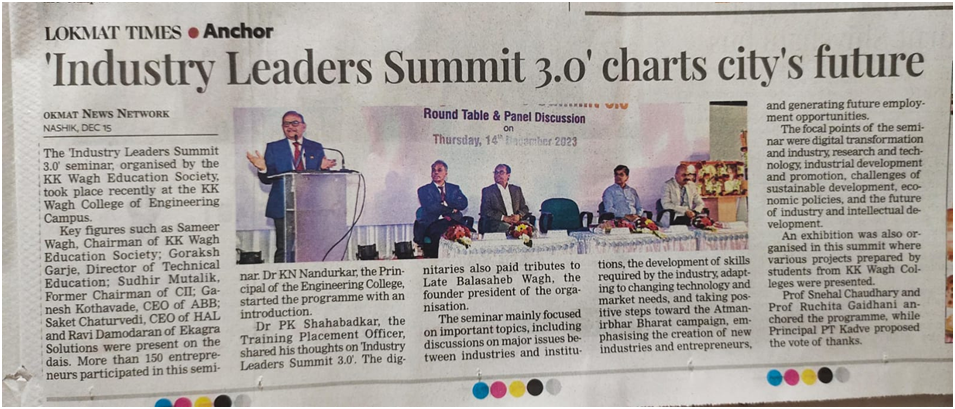
Industry Leaders Summit 3.0 (Round Table Discussion) on 14/12/2023

The K.K.Wagh Institute of Engineering Education & Research has organized an Industry Leaders’ Summit 3.0 (Round Table Discussion) on 14th December 2023. All the industry leaders from the Nashik region joined for this summit. From the Department Prof. Dr. Ravindra Munje, Dr Sharad Dhamal, Prof. Nayana Jangle, Prof. Sudhir Shinde, Prof. Ganesh Jadhav, Prof. Rupali Ahire and Prof. Saravanan.S represented the Electrical Engineering Round tables.


CEO Meeting Round Table Discussions

The K.K.Wagh Institute of Engineering Education & Research has organized an 'Industry Leaders Summit 3.0' on 14th December 2023 and invited all the Industry Leaders in the Nashik region. One of the round tables coordinated by the department was with Shri. Ganesh Kothawade, Senior Vice President - ABB India, Shri. Deepak Patil, COO Legrand (India) Group, Shri. Prashant Kavate and Young Leader Arya Mishra. The team selected the theme of Economic Outlook and Industry Forecast. The discussion was fascinating and resulted in several indicative points to implement. Thanks to all of them for being with us and giving suggestions. The table was coordinated by Dr. Ravindra Munje, Prof. Ganesh Jadhav and Prof. Rupali Ahire.


CEO Meeting “Round Table Discussions”

The K.K.Wagh Institute of Engineering Education & Research has organized an 'Industry Leaders Summit 3.0' on 14th December 2023 and invited all the Industry Leaders in the Nashik region. One of the round tables coordinated by the department was with Shri. Deepak Kumthekar, Chief Engineer, Maha discom, Nashik and Shri. Sanjeev Bhole, Chief Engineer, Maha Transco, Nashik. The discussion was fascinating and resulted in several indicative points to implement in teaching and learning. Thanks to all of them for being with us and giving suggestions. The table was coordinated by Prof. Sudhir Shinde.


CEO Meeting Round Table Discussion

The K.K.Wagh Institute of Engineering Education & Research has organized an 'Industry Leaders Summit 3.0' on 14th December 2023 and invited all the Industry Leaders in the Nashik region. One of the round tables is coordinated by the department. The discussion was fascinating and resulted in several indicative points to implement in teaching and learning and curriculum design. Thanks to all of them for being with us and giving suggestions. The table was coordinated by Dr. Sharad Dhamal and Prof. Nayana Jangle.

National Level Students Conference on ‘AI, ML and IoT Applications in Electrical Engineering’ from 29th- 30th December 2023

Department of Electrical Engineering in association with IET Nashik Local Network and EFFECT Student Body of the Department has conducted a “National Level Students Conference on ‘AI, ML and IoT Applications” in Electrical Engineering’ from 29th December to 30th December 2023. A total of 25 research papers are received for the conference. The Chief Guest and the keynote session speaker for the conference was Shri. Vimal Chaubey (Data Engineer at Tata Croma and Chairman of IET Mumbai Local Network).  He delivered a talk on Wired for Innovation: AI, ML, and IoT Transformations in Electrical Engineering for all the students and participants. Dr. Shubra Jyoti Sarkar and Dr. Abhishek were the session chairs for the conference. During the valedictory function, Dr Shubra Jyoti Sarkar presented his views on the overall conference and guided all the students to write good-quality research papers. The first prize was given to Yashraj Desale (K.K. Wagh Institute of Engineering Education and Research), the second prize was given to Nitin Shejwal (Sanjivani College of Engineering) and the third prize was given to Kishori Bhadgujar, Viraj Jadhav and Gayatri Desale (K. K. Wagh Institute of Engineering Education and Research). The conference was well-organized by Prof. Nayana Jangle and Prof. Snehal Sagare.

Expert Session by Shri. Vimal Chaubey

Keynote session by Shri. Vimal Chaubey (Data Engineer at Tata Croma and Chairman of IET Mumbai Local Network) at the National Level Students Conference on 'AI, ML and IoT Applications in Electrical Engineering' on 29th December 2023 at the Department.

Celebration of ‘Know Our Department’ and ‘Know Our Colleague’ on 07/12/2023

After the term end of all the classes, celebrated for ‘ Know Our Department’ and ‘Know Our Colleague’ on 07/12 /2023. In the first activity of Know Our Department, a quiz of 40 questions on the K. K. Wagh Education Society, K.K. Wagh Institute of Engineering Education & Research, and ElectricalKKWIEER was conducted for all the faculty members through the Google form. This was an open-book type of quiz. All the faculty members enjoyed the quiz.  In the second activity for ‘Know Our Colleague’, faculty and staff members were requested to introduce himself or herself from a family background point of view and other faculty members were requested to describe him or her in one adjective. Overall, it was great fun. Lunch was served during this activity for all the faculty and staff members.


Student Corner

Student Placement

The following students are placed in various multinational companies. Congratulations to all the students!

Placed Students Details (December- 2023)

Sr. No.

Name of the Student

Package

Placement Date

 1

Harshal Rajaram Gaikwad

5 LPA

21/12/2023

 2

Prathamesh Vinayak Gaikwad

5 LPA

21/12/2023

Industrial Visit on 04/12/2023

The Department has conducted an Industrial Visit for S.Y. B.Tech (Div B) students on 4th December 2023 at Motwane Manufacturing Pvt Ltd, Nashik. The visit was coordinated by Prof. Nikhil Gaikwad and Prof. Archana Pawar. 

Industrial Visit on 4th and 5th of December 2023

The Department has conducted an Industrial Visit for S.Y. B.Tech (Div A) students on the 4th and 5th of December 2023 at RISHABH INSTRUMENTS LIMITED, Nashik. The visit was coordinated by Prof. Aishwarya Awhad and accompanied by Mrs. Shubhada Borade and Ms. Ranjana Gaikwad.

Faculty Corner

Faculty Participation

Dr. Subhra J Sarkar, Associate Professor from the Department has presented a research paper at the 3rd International Conference on Emerging Frontiers in Electrical and Electronic Technologies (ICEFEET- 2023) at NIT Patna on 22nd December 2023 on the topic 'Investigation of the performance of Resumable Load Data Compression Algorithm for Distributed Voltage and Frequency Monitoring Data'.


Faculty Members in IET

The Annual General Meeting and Elections for the IET India Nashik Local Network are conducted on 23rd December 2023 at Hotel Grant Rio, Nashik. In this AGM, Prof. Sudhir Shinde and Prof. Nayana Jangle are elected respectively as Vice-Chairman and Secretary of the IET Nashik Local Network for 2024. Congratulations to both of them!

Alumni visit to the department on 30/12/2023.

An enthusiastic, energetic and dynamic personality, the president of the IET Karma veer Expo of that time, Mr. Pratham Nigam visited the department on 30th December 2023 and shared his excitement about the upcoming IET Karma veer Expo 2024.

News Paper
Student Articles

An Overview of Power Electronics in Electric Vehicles
Shivani Kailas Kadam. TE-B, (Electrical)

The rapid electrification of the transportation sector is driving car manufacturers to electrify their fleets with carbon-neutral technologies. Power electronics, a pivotal component in this shift, is undergoing significant development to meet the reliability demands of electric and hybrid vehicles (EVs and HEVs). This article delves into the reliability requirements and challenges of power electronics in EV/HEV applications, highlighting advances in components that enhance overall system reliability. It explores a reliability-oriented design methodology through examples like EV onboard chargers and drive train inverters. While many reliability aspects are well-handled, the article emphasizes the ongoing need to address challenges arising from the introduction of new technologies in the field of power electronics for EVs and HEVs.

1. Introduction

The electrification of modern society is progressing rapidly, driven by a need for efficiency, sustainability, and reduced carbon emissions. Power electronics technology plays a pivotal role in this evolution, particularly in the electrification of the transportation sector. Countries like Norway and Denmark have set ambitious goals for carbon emission-free vehicles, and Bloomberg predicts a substantial increase in electrified car sales by 2040. Power electronics are crucial in electric and hybrid vehicles, contributing to various components such as the drive train and battery management system. The article underscores the importance of modern reliability engineering methods to ensure safety and minimize operational costs. It highlights the challenges associated with wear-out failures in power semiconductor devices and capacitors, emphasizing the need for innovative design and testing methods to enhance the reliability of power electronic systems in the evolving landscape of electrified transportation.

 2. System Overview 

The integration of power electronics in electric vehicles (EVs) marks a crucial step in the evolution of sustainable transportation. This overview underscores the significance of power electronic components, including inverters, converters, and motor drives, in efficiently converting electrical energy and powering EVs. The discussion highlights the ongoing efforts to optimize efficiency, manage thermal challenges, and enhance overall system performance. The subsequent system description provides insights into key components like inverters, converters, and motor drives, emphasizing their roles in influencing the efficiency and reliability of EVs. The comprehensive coverage extends to aspects such as battery charging, grid integration, fault diagnosis, and adherence to safety standards, illustrating the intricate interplay between power electronics and the trajectory of electric vehicle technology. This concise overview captures the pivotal role of power electronics in driving the sustainability and future prospects of the electric vehicle industry.

Fig.1 Block diagram of an Overview of Power Electronics in Electrical Vehicles

3. Power Conversion Architecture in EV/HEV

The passage provides a comprehensive overview of the power electronics architecture in electric and hybrid vehicles (EV/HEV). It emphasizes the pivotal role of power electronics at various levels, illustrating a typical electrical power system in EVs with a focus on key components such as the high-voltage (HV) and low-voltage (LV) DC buses. The onboard charger (OBC) is highlighted for its dual function in battery charging and power factor correction. Challenges related to OBC, including charging time and the demand for higher-power chargers, are discussed.

(a)

(b)

Fig.2 Block diagram of OBC and dc–dc converters. (a) Single-phase ac/dc with interleaved boost PFC topology. (b) Isolated dc-dc.


The text introduces isolated dc–dc converter topologies, emphasizing the use of resonant-based converters like the phase shift full bridge (PSFB) for improved efficiency. The discussion extends to electric machines (EM) and their inverters, noting advancements in permanent magnet (PM) EMs and reliability challenges associated with higher power cycling. The passage concludes with insights into power-switching devices, including the transition from insulated-gate bipolar transistors (IGBTs) and silicon MOSFETs to wide bandgap (WBG) devices like silicon carbide (SiC) and gallium nitride (GaN) for enhanced efficiency and reduced system size, exemplified by Tesla's adoption of SiC devices.


4. Power Modules

Advancements in wide bandgap semiconductor materials and power module packaging are pivotal for realizing the roadmap towards more efficient electronic systems, particularly in automotive applications. Silicon Carbide (SiC) MOSFETs, although offering improved performance, face challenges in power cycling capability compared to traditional Si IGBTs. To address this, advanced packaging concepts, including innovative interconnection, substrate, and die-attach elements, are proposed to enhance reliability and high-temperature operation. 

Fig.3 Advances in packaging elements for power modules

The next-generation automotive modules are expected to operate at temperatures up to 175°C, necessitating low thermal resistance materials such as AlN and Si3N4 ceramics. Techniques like heavy copper wire bonding and direct lead bonds are explored to mitigate bond wire-related failures. Optimized packaging structures, such as over-mould structures and advanced cooling systems like direct liquid cooling, contribute to modularity, reduced size, and enhanced performance. Robust testing methods and standards play a crucial role in ensuring the reliability of these emerging technologies.


6. Concepts of Mission-Profile-Based Design of Power Electronics

(i) Paradigm Shift: Transition from statistics-based reliability evaluation to Physics of Failure (PoF)-based lifetime estimation in power electronics.

(ii) PoF Concept: Understanding root failure causes and mechanisms modeled under realistic operating conditions.

(iii) Empirical Models: PoF models for microelectronics are often not scalable for power electronics, leading to the use of empirical lifetime models.

(iv) DfR Method: Design for Reliability (DfR) methods ensure reliability and quality during early product development stages.

(v) Mission-Profile-Based Assessment: Procedures integrating DfR and PoF principles successfully applied in various applications like wind power converters and electric aircraft.

(vi) Focus on EV/HEV Applications: Reliability assessment methodology focuses on power module reliability within the electrical drive train inverter.

(vii) Six-Step Lifetime Estimation Procedure: Comprehensive process evaluating both component and system-level reliability, requiring extensive knowledge of mechanical, electrothermal, and lifetime parameters.

(viii) Input Mission Profiles: Derived from vehicle driving cycles and ambient temperatures, serving as the basis for reliability assessments.

(ix) Electromechanical and Electrothermal Modeling: Utilized to convert input mission profiles into mechanical power and determine voltage and current loadings of power electronic components.

(x) Reliability Metrics: Thermal and electrical stressors, along with empirical lifetime models, are used to estimate vital reliability metrics (e.g., lifetime distribution and unreliability curve) of power electronic components.

(xi) System-Level Reliability: Achieved through a reliability block diagram (RBD) analysis, merging individual component reliability information
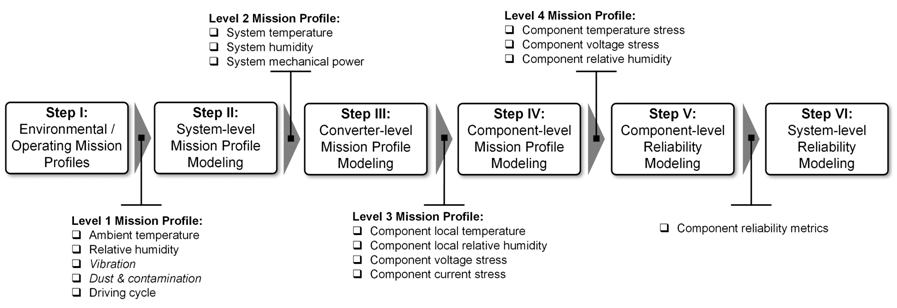
Fig.4 General mission-profile-based reliability assessment procedure for power electronic system.


7. Conclusion


Electronics plays a crucial role in Electric Vehicles (EVs) and Hybrid Electric Vehicles (HEVs), with design and implementation being essential factors. Reliability stands out as a critical success criterion for widespread adoption. The article provides an extensive overview of power electronic architectures in EVs/HEVs, emphasizing the importance of reliability requirements. While some standards exist, others are yet to be defined, indicating ongoing challenges as technology evolves. Component development, especially concerning capacitors and active devices, along with effective cooling, is vital for system reliability and safety. At the system level, a reliability-oriented design is key for cost reduction and optimization, complemented by condition monitoring in operational EV/HEV fleets. Multidisciplinary simulation tools are crucial for Design for Reliability (DfR), illustrated through two case studies. Future challenges and research opportunities include the wider use of wide bandgap devices, enhanced overall system control based on reliability indexes, improved packaging technologies, and dynamic handling of large data for proactive preventive maintenance.

Saturday, December 16, 2023

e-Newsletter -November 2023

Department Events

Expert lecture on “Overview of The Semiconductor Industry and Career Options” on 25/11/2023

Department of Electrical Engineering in Association with IET On-Campus Organized an Expert Lecture on “Overview of The Semiconductor Industry and Career Options for SE (A and B) students and staff of the department on 25/11/2023:  Resource Person: Mr. Chetan Patil, Senior Product Engineer, NXP USA Inc. Total No. of Students present = 112. The session helped students to understand what opportunities they can grab in semiconductor industries and, the different roles of engineers in industry. Even the manufacturing process of semiconductors was discussed by the expert.

Short-term training program (STTP) on “ANSYS for Machine Design”

Department of Electrical Engineering and Electric Mobility and Transportation (EMT) Club completed Two days of the short-term training program (STTP) on “ANSYS for Machine Design” in association with ARK Info Solutions from 30th October 2023 to 31st October 2023. The topics discussed during the STTP are Introduction to ANSYS LF Tools and Maxwell GUI. The STTP was attended by students as well as faculty members. The STTP was coordinated by Prof. Ganesh Jadhav and Prof. Snehal Sagare.

Warli painting activity for the F. Y. B. Tech students on 06/11/2023

The department recently organized a “Warli Painting Activity” for the F. Y. B. Tech students. It was a great opportunity for them to learn more about this traditional art form and to express their creativity. The activity was well-received by the students, who enjoyed the chance to work with different materials and techniques. Overall, it was a fun and educational experience for everyone involved.

E-Learning on “Electric Vehicle Design” on 04/11/2023

Department of Electrical Engineering in association with Pantech E-Learning has completed an exclusive 3-Hours Live Zoom Session on “Electric Vehicle Design” on 4th November 2023. A live interactive workshop was conducted by Mr Malaiyappan, Technical Director and industry Project Acquisition Manager in the EV sector. The topics discussed during the webinar were Introduction to MATLAB, Forces on EV design calculation, and Simscape-based modelling. The webinar was attended by students as well as faculty members. The webinar was coordinated by Prof. Snehal Sagare.


Student Corner

Student Placement

The following students are placed in various multinational companies. Congratulations to all the students!

Placed Students Details (November - 2023)

Sr. No.

Name of the Student

Placement Date

1.

Amrita Devi

08/11/2023

2.

Mahadwad Devanand Ramrao

09/11/2023

    3.       

Yeola Hitesh Jagannath

09/11/2023

    4.       

Naik Pradeep Sampat

09/11/2023

    5.       

Wagh Pranali Vilas

09/11/2023

    6.       

Changan Prasad Dasharath

09/11/2023

    7.       

Tidake Prasad Vilas

09/11/2023

    8.       

Bodke Roshan Ramesh

09/11/2023

   9.       

Varode Swarup Mohan

09/11/2023

10.   

Kale Nikita Nandkishor

09/11/2023

11.   

More Neha Sandip

16/11/2023

12.   

Dheple Ishwari Sanjay

16/11/2023

13.   

Aishwarya Mohan Gadekar

18/11/2023

14.   

Gayatri Gorakh Jadhav

18/11/2023

15.   

Gayatri Kishor Desale

18/11/2023

16.   

Sakshi Sham Girase

18/11/2023

17.   

Sandhya Bharat Shinde

18/11/2023

18.   

Shital Kailas Waje

18/11/2023


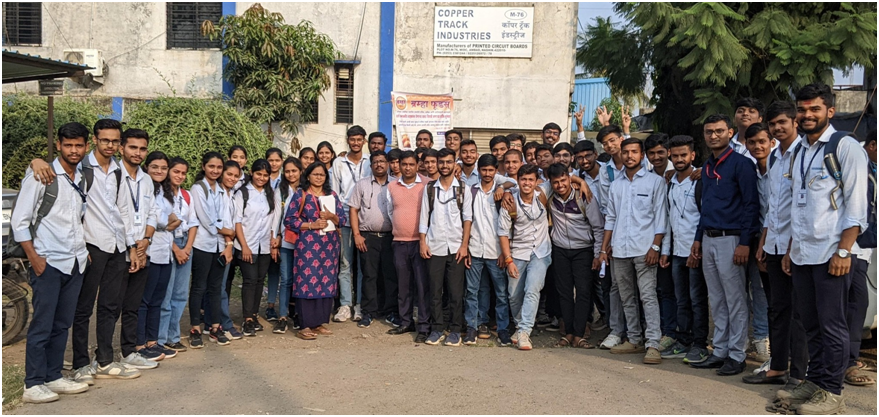
Industrial visit and PCB Manufacturing Workshop at Copper Track Industry on 06/11/2023

The Department of Electrical Engineering has conducted an industrial visit and PCB Manufacturing Workshop at Copper Track Industry for S.Y. B.Tech. It was an amazing experience for the students. Students got to witness the production process of copper wires and cable harnesses first-hand, and it was truly fascinating. The staff members at Copper Track Industry were very welcoming and knowledgeable. They explained everything in detail and answered all our questions patiently. Students got to see the various machines used in the production process and learn about the different stages involved in making PCBs. It was a great opportunity for students to see how the theoretical knowledge gained in classrooms is applied in real-life scenarios. The visit and workshop were coordinated by Prof. Nayana Jangle, Prof. Alok Kumar and Prof. Nikhil Gaikwad.


Industrial Visit on 06/11/2023

On 6th November 2023, an industrial visit was successfully done at “Altra Power Electrical Industry, Sinnar” for S.Y. B.Tech (Div B) students. A total of 59 students and two faculties Prof. Ganesh Jadhav and Mrs. Jayshree Ghumare were present for the industrial visit. This visit has been conducted for the course on Transformer and Induction Machines.  This has helped students to better understand the course and bridge the gap between theoretical knowledge and real-time industrial work. Some students have assembled the shaft and winding on the rotor.

Industrial Visit on 07/11/2023

Industrial visit at Altra Power Electrical Industries, Malegaon, Sinner for SYB.Tech - Div A students on 7th November 2023. The visit was coordinated by Prof. Sudhir Shinde and Ms. Ranjana Gaikwad.

Industrial visit on 28/11/2023

The department has arranged an Industrial visit of S.Y. B.Tech Students (Div A and B) to Gauss Electromagnetics, Nashik on 28th November 2023. The visit was coordinated by Prof. Chetan Gadge and Prof. Pooja Sapkade. During the visit, students got the opportunity to interact with industry professionals and learn about the latest trends and technologies used in the industry. They also got an insight into the work culture and work environment of the industry. Industrial visits helped students develop a better understanding of the workplace, and they got to see how theoretical knowledge is applied in practical situations.

Aavishkar 2023 Competition

The team from the Department of Electrical Engineering has been selected for the University Level Round of the Aavishkar 2023 Competition. The team is guided by Prof. Ganesh N. Jadhav. Team members are Atharva Rajhans, Avishkar Arote, Mayur Bunge and Siddhant Sakhare. Congratulations and Best wishes to them.


NPTEL Courses

The following students successfully completed the NPTEL course: Congratulations to all the students!

Name of Students


Course Name

Final Score %

Ahire Yash Manojkumar

DC Microgrid and Control System

51

Ahirrao Nitin Pramod

DC Microgrid and Control System

44

Bagul Sandip Pandit

DC Microgrid and Control System

45

Barkade Tushar Sida

Soft Skill Development

58

Bhargav Pratik Gajanan

Power Plant Engineering

54

Bhavsar Harshad Sham

DC Microgrid and Control System

47

Bodke Roshan Ramesh

DC Microgrid and Control System

68

Bodke Yash Dnyaneshwar

Power Plant Engineering

42

Changan Prasad Dasharath

Power Plant Engineering

58

Chaudhari Mehul Ravindra

DC Microgrid and Control System

46

Chavanke Gauri Ravindra

Power System Protection and Switchgear

69

Cheke Yash Pundlik

DC Microgrid and Control System

52

Choukate Aditya Prakash

Power System Protection and Switchgear

75

Dalavi Samarth Shyamsundar

Power Plant Engineering

41

Dhage Amit Ramnath

Developing Soft Skills and Personality

66

Dhake Chandan Mahendra

Power System Protection and Switchgear

75

Dhomase Anuja Dilip

Power System Protection and Switchgear

49

Firake Jayesh Ramesh

Power System Protection and Switchgear

80

Gawande Uday Popat

Soft Skill Development

51

Girase Sakshi Sham

Power System Protection and Switchgear

80

Jadhav Gayatri Gorakh

Power System Protection and Switchgear

65

Jadhav Prashant Deepak

Power System Protection and Switchgear

62

Kale Aditya Dilip

Fundamentals of Electrical Engineering

54

Kale Shraddha Somnath

Power System Protection and Switchgear

61

Kalyankar Umesh Namdevrao

DC Microgrid and Control System

81

Kamble Tejas Tukaram

Power System Protection and Switchgear

55

Kardak Vishal Devidas

Power Plant Engineering

49

Katkade Pratik Sanjay

Soft Skill Development

46


Kedare Darshan Prabhakar

Power System Protection and Switchgear

63

Kharane Kajal Babanrao

Power System Protection and Switchgear

66

Khatal Ashish Chudaman

DC Microgrid and Control System

60

Kothawade Apurva Anil

Power System Protection and Switchgear

73

Kulkarni Gaurav Ganesh

Sustainable Power Generation Systems

49

Kulkarni Hrushikesh Ajay

Power Plant Engineering

41

Kushare Rajashree Vilas

Power System Protection and Switchgear

60

Mahadwad Devanand Ramrao

Power System Protection and Switchgear

66

Mahale Vaishnavi Sanjay

DC Microgrid and Control System

39

Mandlik Prasad Madan

Power Plant Engineering

50

Mistary Gaurav Rajesh

Fundamental of Electrical Engg

43

Mudgul Shivam Valu

Power System Protection and Switchgear

66

Naik Pradeep Sampat

Power Plant Engineering

52

Ohol Gayatri Sanjay

Power System Protection and Switchgear

62

Palde Tejas Vilas

Power System Protection and Switchgear

73

Pangarkar Parth Dhananjay

Design of Electric Motors

43

Pansare Rushikesh Balaji

Power System Protection and Switchgear

46

Patil Kalpesh Yuvraj

Sustainable Power Generation system

65

Patil Rohit Krishna

DC Microgrid and Control System

56

Rajbhoj Dnyaneshwari Nandkishor

Ecology and Environment

44

Shaikh Shahrukh Khayyum

Power System Protection and Switchgear

54

Sharma Aman Shravan

Power Plant Engineering

50

Shermale Roshan Ramkisan

Power Plant Engineering

45

Shinde Neha Vijay

Power System Protection and Switchgear

47

Shinde Sandhya Bharat

Power System Protection and Switchgear

70

Suryavanshi Siddhesh Dilip

Power System Protection and Switchgear

68

Tidake Prasad Vilas

Power Plant Engineering

50

Varode Swarup Mohan

Power Plant Engineering

48

Wagh Pranali Vilas

Power System Protection and Switchgear

65

Wagh Sahil Santosh

Developing soft Skills and Personality

54

Wagh Tejas Kautik

DC Microgrid and Control System

50

Wankhade Amar Mohan

Power System Protection and Switchgear

78

Yeola Hitesh Jagannath

Power System Protection and Switchgear

65

Chinchole Prathmesh Rajesh

DC Microgrid and Control System

52


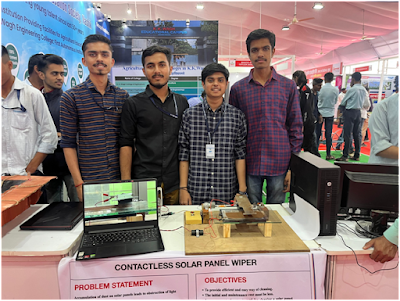
Krishithon 2023 (Agriculture Expo & Agri Exhibition)

A project by our students was presented at Krishithon 2023 (Agriculture Expo & Agri Exhibition) in Nashik. Students are Atharva Rajhans, Avishkar Arote, Mayur Bunge and Siddhant Sakhare. 


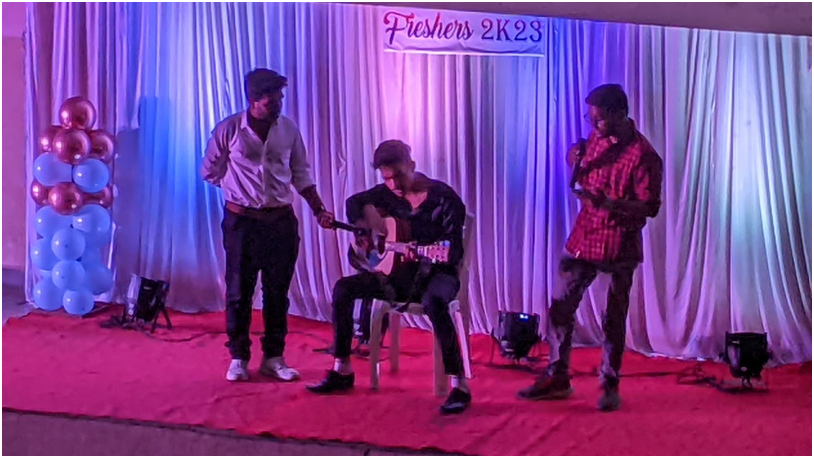
Fresher Welcome Party 2023

After a gap of 4 years, the Department and EFFECT Student Body organized a welcome party (Freshers Party) for the S. Y. B. Tech students. It was the 1st welcome of students entered under Autonomy. It was great to see the excellent coordination among students, and enthusiasm to showcase talent and create a sense of belonging. Everyone has a great time and gets to know each other better. 


Faculty Corner

Faculty Participation

The following staff members have completed the courses given below in November 2023

Name of staff

Name of course

Duration

Platform

Prof. Sudhir Shinde

NPTEL- AICTE Faculty Development Program “Ethics in Engineering Practices”

8 weeks

Online FDP course

Prof. Aishwarya R. Awhad

 International Faculty Development Program (FDP) on “Advanced Topics in Control Systems”

3 Day

Offline FDP course

Congratulations!

The patent is granted for Dr. Ravindra Munje and Prof. Sudhir Shinde. Other faculty members are Dr. Ajinkya Joshi, Dr. Vilas Patil and Prof. Prakash Kadve.

Congratulations to Prof Prajakta Vikas Dhole


Congratulations to Prof. Sudhir K Shinde


Congratulations to Prof. Swapnil S Sudake


Alumni Interaction and Felicitation

Mr. Dhaval Tagare, an Alumnus of the Department and the owner of E-mmortal Automotives Pvt. Ltd. (Battery Manufacturing Company) visited the stall K. K. Wagh Education Society at Krishithon Exhibition 2023 on 25th November 2023. During this visit, Prof. Jitendra Patil felicitated Mr. Dhaval T. and his team and provided the latest updates about the department and institute.

News Paper

Congratulations!

An initiative by our student Mr. Prasad Rathod. He presented his research paper at the 74th International Astronautical Congress in Baku, Azerbaijan on 6G communication for satellite and terrestrial connectivity. Congratulations to him.


Student Articles:

DC Microgrid for Rural and Remote Electricity Access Application


Komal Dilip Kalamkar TE-B (Electrical)

(komalkalamkar009@gmail.com)

Access to reliable electricity is essential for the socio-economic development of rural and remote areas. However, conventional AC grid extensions often prove impractical due to high costs, long transmission lines, and environmental constraints. This project report explores the design, implementation, and assessment of a DC microgrid system tailored for rural and remote regions, with a particular focus on enhancing electricity access and fostering economic development.

1. Introduction

Access to reliable electricity is a fundamental requirement for the social and economic development of rural and remote areas. However, many of these regions face challenges in establishing and maintaining conventional AC grid infrastructure. This project report explores the design, implementation, and evaluation of a DC microgrid system for rural and remote electricity access applications. Through a case study, we demonstrate the feasibility of this technology and its potential to transform the lives of underserved communities.

In the quest for universal energy access, the focus has shifted towards innovative solutions tailored for rural and remote areas. One such promising technology gaining traction is the implementation of DC microgrids shown in Fig. 1. Unlike traditional AC systems, DC microgrids offer a more efficient and cost-effective approach to electrifying off-grid communities

2. Architecture of DC Microgrid

Key Components of DC Microgrid Architecture:

(1) Generation Sources:

Solar Power: Photovoltaic panels harness the abundant sunlight in remote areas, converting it into direct current. Solar power forms a cornerstone of sustainable energy generation in DC microgrids.

Wind Turbines: Small-scale wind turbines contribute to the energy mix, particularly in regions with favorable wind conditions. Their modular design makes them suitable for decentralized energy production.

(2) Energy Storage:

Batteries: DC microgrids rely on energy storage solutions such as lithium-ion batteries to store excess energy generated during peak times. These batteries ensure a steady power supply during periods of low or no generation.

(3) DC Bus:

Distribution Network: A low-voltage DC bus forms the backbone of the microgrid, efficiently distributing power to various loads within the community. The simplicity of DC distribution reduces transmission losses and enhances overall system reliability.

(4) Power Electronics:

Inverters and Converters: While the microgrid operates on DC, certain appliances may require AC power. Inverters and converters play a crucial role in converting power between DC and AC as needed, ensuring compatibility with a variety of devices.

(5) Control and Monitoring System:

SCADA Systems: Supervisory Control and Data Acquisition (SCADA) systems enable real-time monitoring and control of the microgrid. This technology allows for remote management, fault detection, and optimization of energy flows.

3. How it works?

A DC microgrid operates on direct current, providing localized power distribution with various benefits. Key components include power sources (solar panels, batteries), converters, and loads. DC minimizes energy losses, enhances efficiency, and supports the integration of renewable sources. It's gaining traction for its resilience and suitability in specific applications, contributing to sustainable energy solutions. 


Fig 1. DC Microgrid

4. Challenges in DC Microgrid

DC microgrids hold great potential for providing electricity access in rural and remote areas, but they also come with a set of challenges. One significant challenge is the limited availability of DC-compatible appliances and devices, which can make it difficult for residents to fully utilize the power supply. Moreover, DC microgrids often require careful design and maintenance due to voltage and current management issues. These grids may face efficiency losses over longer transmission distances, and voltage drop can become a concern. Additionally, sourcing, installing, and maintaining the necessary renewable energy generation equipment, such as solar panels and wind turbines, can be logistically challenging in remote locations. Furthermore, financing and community engagement are essential for the successful implementation of DC microgrids in rural and remote areas. Overcoming these challenges will be crucial for ensuring reliable and sustainable electricity access in these underserved regions.


5. Future Scope

(1) Saving Energy: DC microgrids can help us use electricity more efficiently, which means we waste less energy and save money.

(2) Clean Energy: They're great for using clean energy from sources like the sun and wind, helping us be more eco-friendly.

(3) Keeping the Lights On DC microgrids can keep the power on even when the main electricity grid has problems, making our electricity supply more reliable.

(4) Smart Energy: They can work together with smart technologies to make our electricity grid smarter and better at managing power.

(5) In Cities and Countryside: DC microgrids can be used in both big cities and remote areas to provide electricity where it's needed.

(6) Charging Electric Cars: They can make it faster and easier to charge electric cars, which is good for the environment.

(7) Safety and Security: We need to make sure they are safe from hackers and other problems to keep our electricity supply secure.

(8) Affordable Energy: We're working to make sure DC microgrids are not too expensive, so more people can use them.

(9) Ongoing Improvements: Scientists and engineers are always finding new ways to make DC microgrids better and more useful.

6. Conclusion

The implementation of a DC microgrid for rural and remote electricity access applications holds significant promise for addressing energy challenges in these areas. DC microgrids offer a reliable and cost-effective solution that can efficiently harness renewable energy sources, such as solar and wind, to provide consistent power supply to off-grid and underserved communities. This technology has the potential to improve the quality of life, stimulate economic development, and reduce carbon emissions in these regions. However, successful deployment will depend on careful planning, community engagement, and ongoing maintenance to ensure the sustained benefits of electricity access to rural and remote areas.

e-Newsletter-June 2026

HOD Corner We are delighted to present the June 2026 edition of the e-Newsletter from the Department of Electrical Engineering, K. K. Wagh I...