Project Competition for F.Y. B.Tech students on 01/5/2024
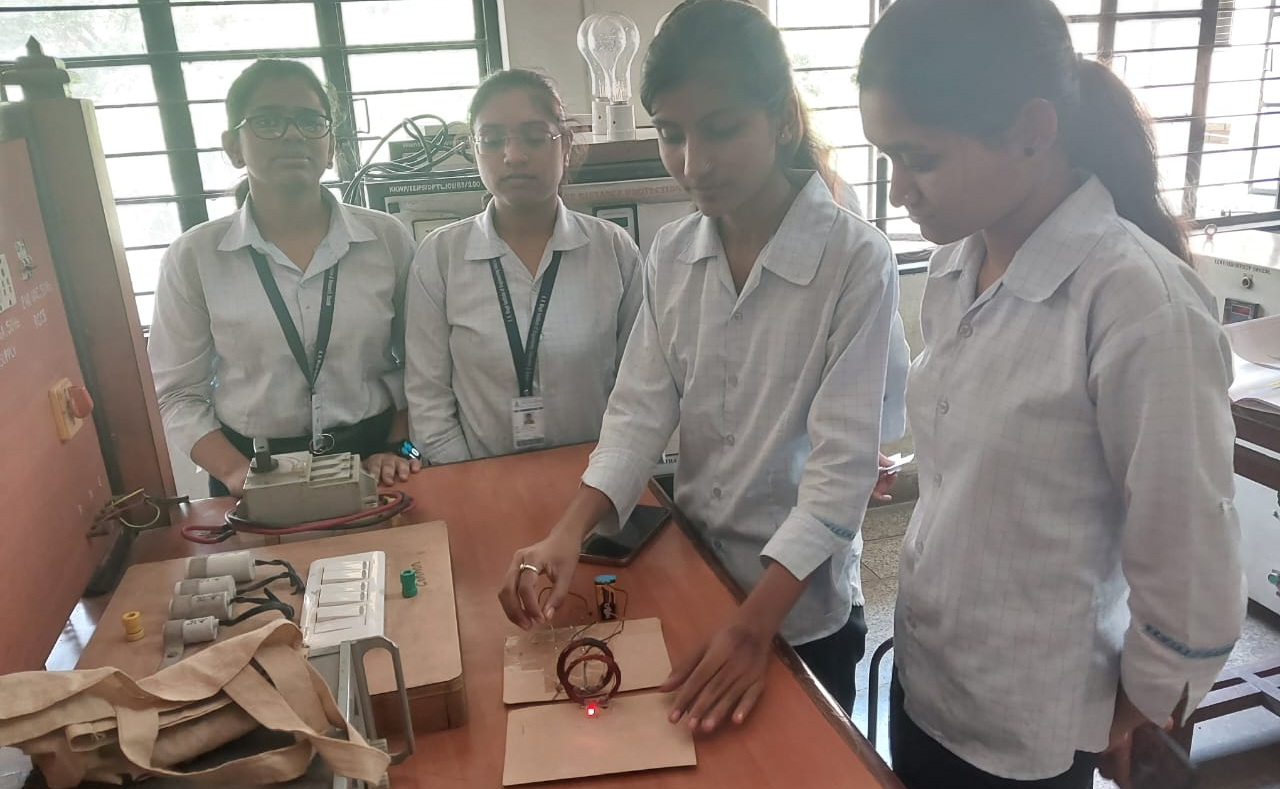
The Department of Electrical Engineering organized a “Project Competition” for FY BTech (Electrical) Students, held on April 30th, 2024, showcasing the brilliance and innovation of our budding engineers from both divisions (N and O). This remarkable competition, a part of the Engineering Exploration Course, served as a platform for our students to demonstrate their ingenuity and technical prowess through a total of 27 innovative projects. A big shoutout to our esteemed panel of evaluators - Dr. Sharad Dhamal, Prof. Nayana Jangle, and Dr. Saravanan - who meticulously assessed each project, providing invaluable feedback and insights. None of this would have been possible without the tireless efforts of Prof. Jitendra Patil and Prof. Ashwini Khaire, who flawlessly coordinated the entire competition, ensuring smooth execution and a memorable experience for all involved. We are immensely proud of all the participants for their dedication, creativity, and hard work. Your projects truly exemplify the spirit of innovation that defines our department and university.


Guidance session on “Hackathons and Project Competitions” on 03/05/2024
Prof. Priya Rakibe graced with an enriching session on May 3rd, 2024, aimed at gearing up our SY BTech Electrical students for the upcoming wave of Hackathons and Project Competitions. Her insightful guidance and expertise in the realm of innovation and competition prep left our students feeling empowered and ready to conquer any challenge that comes their way.
Student Corner:
Student Placement:
The following students are placed in various multinational companies. Congratulations to all the students!
Placed Students Details (May- 2024)
Sr. No. | Name of the Student | Package | Placement Date |
1. | Avhad Rahul Hirusheth | 4.25 | 8 /05/2024 |
2. | Paner Om Harishchandra | 4.25 | 8 /05/2024 |
3. | Wagh Siddhant Sakharam | 4.25 | 8 /05/2024 |
4. | Ahirrao Nitin Pramod | 4.25 | 8 /05/2024 |
5. | Borole Mukesh Vasudeo | 4.25 | 8 /05/2024 |
6. | Mandlik Prasad Madan | 4.25 | 8 /05/2024 |
7. | Khatal Ashish Chudaman | 4.25 | 8 /05/2024 |
8. | Kushare Rajashree Vilas | 6.35 | 14/05/ 2024 |
9. | Ahirrao Nitin Pramod | 6 | 24/05/2024 |
10. | Gosavi Priyanka Mahendra | 7.23 | 27/05/2024 |
11. | Wairagade Ankit Mangesh | 7.23 | 27/05/ 2024 |
12. | Aman Shravan Sharma | 3.24 | 29/05/2024 |
13. | Aditya Dilip Kale | 3.24 | 29/05/2024 |


Felicitation ceremony at the prestigious Aurangabadkar Hall on 27/05/2024
On 27th May 2024, the K.K.Wagh Institute of Engineering Education & Research organized the next version of a heartwarming felicitation ceremony at the prestigious Aurangabadkar Hall, Nashik. In a special gesture of appreciation and gratitude, we extend our warmest congratulations to the proud parents of our esteemed students who have secured placements.
Their unwavering support, encouragement, and sacrifices have played a pivotal role in shaping the success stories of our students. On this day, we celebrate their tireless efforts and commitment towards nurturing bright futures. As we gather to honor these exceptional parents, let us rejoice in the achievements of our students and express gratitude to those who have stood by them every step of the way. Let this ceremony be a testament to the power of parental love and support in shaping promising futures
Study Tour for FY B Tech Students (Electrical) on 05/05/2024
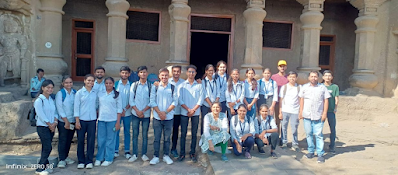
The Department of Electrical Engineering and Applied Science at K.K. Wagh Institute of Engineering Education and Research orchestrated an enlightening study tour for our FY B Tech Students (Electrical) that promises to be a memorable journey into architectural wonders. On May 5th, 2024. our eager students embarked on a captivating expedition to Pandavleni, delving into the rich tapestry of architectural marvels steeped in history and culture. This immersive experience was a pivotal component of our Indian Knowledge System course, designed to broaden horizons and deepen understanding. Guided by Dr. Anuradha Pawar and Prof. Ganesh N. Jadhav, our students had the privilege of exploring the intricate details and timeless beauty of Pandavleni, gaining invaluable insights into architectural principles and historical significance. At K.K. Wagh Institute of Engineering Education and Research, we believe in nurturing holistic education that extends beyond the confines of classrooms, empowering our students to connect theory with real-world experiences and heritage. This study tour exemplifies our commitment to providing enriching learning opportunities that shape well-rounded professionals.
Congratulations
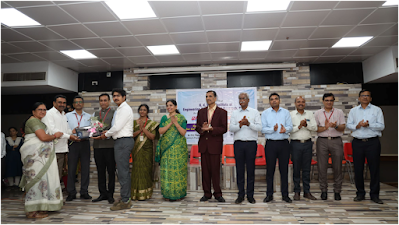
Department of Electrical Engineering is happy to announce that Karan Bagul, Hemant Bhoi, Yogesh Bhoye, Pratik Gaikwad, and Omkar M Jadhav from the FY B. Tech (Division N) have clinched Second Prize in the Hardware category at the Institute Level project competition under Engineering Exploration course conducted on 8th May 2024!
The prize was awarded at the hands of Vanky Kataria and in the presence of Prof. Dr Vilas Patil and Prof. Anuradha Pawar. Their remarkable project, "Automatic Fire Brigade Truck," stood out for its innovative approach and practical application. The project was guided by Prof. Ashwini Khaire, Prof. Aishwarya Awhad and Prof. Sonali Patil.
This achievement underscores their dedication, ingenuity, and collaborative spirit. Congratulations to the entire team for their well-deserved recognition!
Congratulations
Department of Electrical Engineering is happy to announce that Chetna Ahire, Rohini Dhikle, Kajal Dongre and Rohini Gaikwad from the FY B. Tech (Division O) have clinched the Consolation Prize in the Hardware category at the Institute Level project competition under the Engineering Exploration course conducted on 8th May 2024!
The prize was awarded at the hands of Vanky Kataria and in the presence of Prof. Dr Vilas Patil and Prof. Anuradha Pawar. Their remarkable project, "River Cleaner Boat," stood out for its innovative approach and practical application. The project was guided by Prof. Jitendra Patil and Prof. Archana Pawar. This achievement underscores their dedication, ingenuity, and collaborative spirit. Congratulations to the entire team for their well-deserved recognition!
Institute Level Final Year Project Competition held on 4th May 2024
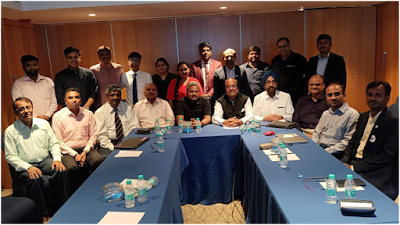
We are thrilled to announce that four teams from our department participated in the Institute Level Final Year Project Competition held on 4th May 2024, conducted by the Internal Quality Assurance Cell (IQAC) of the Institute. Our students showcased their innovative projects, highlighting the hard work, creativity, and dedication that has been the hallmark of our department. We couldn't be prouder of their achievements and the way they represented us on such a prestigious platform. Here are some glimpses from the event, capturing the energy and enthusiasm of our brilliant minds.
Industrial visit of BE on 24/05/2024
On 24th May 2024, our final-year students from the Department of Electrical Engineering had a fantastic opportunity to deepen their knowledge in Illumination Engineering through an industrial visit to SEAL Tech Pvt Ltd. During the visit, students explored cutting-edge technologies in Efficient Lighting and Automation, witnessing firsthand the innovations shaping the future of lighting solutions. The visit was coordinated by Prof. Rupali Ahire. For the students it was an insightful experience, bridging the gap between academic learning and real-world application.
Farewell ceremony for final-year students
On May 29, 2024, the Department of Electrical Engineering at K.K. Wagh Institute of Engineering Education and Research hosted a farewell ceremony for its final-year students in collaboration with the EFFECT Student Body. The event, held in Faraday Hall, was a heartfelt occasion. Dr. Ravindra Munje, Head of the Electrical Engineering Department, opened the ceremony with a speech, praising the students for their perseverance, achievements, and commitment to their futures. Faculty members also highlighted memorable moments with the graduating class and encouraged them to pursue their dreams with confidence and integrity. Graduating students then shared their experiences and expressed gratitude. The farewell concluded with a vote of thanks and a group photo session. The EFFECT Student Body organized the entire event under the guidance of Prof. Snehal Sagare and Prof. Chetan Gadge.
Faculty Corner:
Congratulations to Prof. Nayana N Jangle
Newspapers Cutting
Views of our Student Mr Yugant Nandre in Pudhari Newspaper (03/05/2024)
Student Articles:
Maharashtra State Power Generation Co. Ltd.
Bhusawal Thermal Power Plant, Deepnagar Chaulkar
Shivani Kailas Kadam. TE-B, (Electrical)
Maharashtra State Power Generation Company Ltd. (Mahagenco) operates thermal power plants (TPS) that efficiently convert thermal energy into electricity through the Rankine cycle. These plants burn fossil fuels like coal, oil, or natural gas to produce heat, which is then used to generate steam. The steam powers turbines connected to generators, ultimately producing electricity. Components include boilers, turbines, generators, cooling systems, fuel preparation systems, and emission control systems. The Bhusawal Thermal Power Station (BTPS) has an installed capacity of 1210MW and is divided into sections like coal handling, ash handling, control rooms, and water treatment plants. Mahagenco, with a total generation capacity of 11237MW, focuses on providing cost-effective electricity to over 15 million consumers in Maharashtra. The company is committed to expanding its capacity to meet growing demand and has adopted quality management systems, with major power stations certified under ISO 9001:2000, ISO 14001, and ISO 18001 for environmental and occupational health management.
1. Introduction:
Mahagenco, Maharashtra's leading power generation company, operates the Bhusawal Thermal Power Plant in Deepnagar, Maharashtra. This coal-based plant, with an impressive 1210 MW installed capacity, serves as a vital energy source for the state. Operating on the Rankine Cycle principle, it efficiently converts heat energy into mechanical work to generate electricity. Through processes involving a boiler, turbine, condenser, and pump, water is heated to produce steam, which drives the turbine to generate power. The generated electricity is then supplied to meet Maharashtra's energy needs.
Table 1.1. Plant-installed Capacity Detail
Stage | Unit Number | Installed Capacity (MW) | Date of Commissioning | Status |
Stage I | 1 | 62.5 | 1968 July | Closed |
Stage II | 2 | 210 | 1979 August | Retired |
Stage III | 3 | 210 | 1982 September | Running |
Stage IV | 4 | 500 | 2012 November | Running |
Stage V | 5 | 500 | 2014 January | Running |
Stage VI | 6 | 660 | In Progress | Planned |


2. Brief History of Industry:
Maharashtra State Power Generation Company Limited (Mahagenco), a major player in Maharashtra's power sector, boasts a formidable generation capacity of 14,400 MW, making it India's second-largest power producer. Established in June 2005 as a subsidiary of the Maharashtra State Electricity Board, Mahagenco has played a crucial role in supplying power to the state. The Bhusawal Thermal Power Station (BTPS) is integral to Mahagenco's operations, with unit 4 (500MW) operational since March 2012. Plans for unit 6 expansion to 660MW have been underway since 2011, with efforts to enhance environmental compliance through emission controls. Despite advancements, unit 6 is yet to become operational.
3. System Overview :
3.1 Introduction
In the previous chapter, detailed information about the company is given. This chapter represents the System overview. In this chapter basic process of production of electricity is given.
3.2 Schematic Diagram of Thermal Power Plant
Maharashtra State Power Generation Company Ltd. (Mahagenco) operates thermal power plants (TPS) that efficiently convert thermal energy into electricity through the Rankine cycle. These plants burn fossil fuels like coal, oil, or natural gas to produce heat, which is then used to generate steam. The steam powers turbines connected to generators, ultimately producing electricity. Components include boilers, turbines, generators, cooling systems, fuel preparation systems, and emission control systems. The Bhusawal Thermal Power Station (BTPS) has an installed capacity of 1210MW and is divided into sections like coal handling, ash handling, control rooms, and water treatment plants. Mahagenco, with a total generation capacity of 11237MW, focuses on providing cost-effective electricity to over 15 million consumers in Maharashtra. The company is committed to expanding its capacity to meet growing demand and has adopted quality management systems, with major power stations certified under ISO 9001:2000, ISO 14001, and ISO 18001 for environmental and occupational health management.
1. Introduction:
Mahagenco, Maharashtra's leading power generation company, operates the Bhusawal Thermal Power Plant in Deepnagar, Maharashtra. This coal-based plant, with an impressive 1210 MW installed capacity, serves as a vital energy source for the state. Operating on the Rankine Cycle principle, it efficiently converts heat energy into mechanical work to generate electricity. Through processes involving a boiler, turbine, condenser, and pump, water is heated to produce steam, which drives the turbine to generate power. The generated electricity is then supplied to meet Maharashtra's energy needs.
Table 1.1. Plant-installed Capacity Detail
Stage | Unit Number | Installed Capacity (MW) | Date of Commissioning | Status |
Stage I | 1 | 62.5 | 1968 July | Closed |
Stage II | 2 | 210 | 1979 August | Retired |
Stage III | 3 | 210 | 1982 September | Running |
Stage IV | 4 | 500 | 2012 November | Running |
Stage V | 5 | 500 | 2014 January | Running |
Stage VI | 6 | 660 | In Progress | Planned |
2. Brief History of Industry:
Maharashtra State Power Generation Company Limited (Mahagenco), a major player in Maharashtra's power sector, boasts a formidable generation capacity of 14,400 MW, making it India's second-largest power producer. Established in June 2005 as a subsidiary of the Maharashtra State Electricity Board, Mahagenco has played a crucial role in supplying power to the state. The Bhusawal Thermal Power Station (BTPS) is integral to Mahagenco's operations, with unit 4 (500MW) operational since March 2012. Plans for unit 6 expansion to 660MW have been underway since 2011, with efforts to enhance environmental compliance through emission controls. Despite advancements, unit 6 is yet to become operational.
3. System Overview :
3.1 Introduction
In the previous chapter, detailed information about the company is given. This chapter represents the System overview. In this chapter basic process of production of electricity is given.
3.2 Schematic Diagram of Thermal Power Plant

3.3 Working of BTPS
The process at Bhusawal Thermal Power Station (BTPS) initiates with the Coal Handling Plant (CHP), where coal unloading occurs, followed by conveyance to the coal mill via conveyor belts Shown in Fig 3.1. In the coal mill, coal is pulverized into a fine powder, which is then conveyed to the boiler furnace with the assistance of the PA fan. Combustion requires both coal and oil, so oil is provided alongside coal, a process known as pulverizing. For efficient combustion, air is supplied by the FD Fan through the air preheater. Within the boiler, water is heated to produce steam, which is then expanded through turbines. These turbines are coupled with generators to generate electricity, which is subsequently stepped up and conveyed to the grid. The boiler also produces ash and flue gases, with the flue gases directed through the ID fan, electrostatic precipitator, and chimney into the atmosphere. Ash disposal is managed through the Ash Handling System (ASP).
4. Equipment Required in BTPS
4.1 Coal Handling Plant (CHP)
The coal handling plant (CHP) at Bhusawal Thermal Power Station (BTPS) plays a pivotal role in ensuring efficient coal utilization shown in Fig 4.1 and Block Shows in Fig 4.2. It commences with unloading coal from BOBR and box-type wagons via Track Hopper and Wagon Tippler, respectively. The feeding process guarantees a consistent coal flow to meet bunker requirements, utilizing various feeders like Paddle, Apron, Belt, and Vibrating feeders. Screening segregates coal into fine, coarse, and wet categories using Vibrating and Roller screens. Crushing reduces coal to the desired size with Ring granulator-type crushers before pulverization.
Fig 4.1 Coal unloading system
Fig 4.2 Block diagram of CHP
4.2 Water Treatment Plant
Water treatment is a critical aspect of thermal power plants, with prime focus due to various reasons. Water, containing impurities, can lead to issues like scale formation and tube blockage inside the boiler, compromising heat transfer efficiency and risking tube melting. Moreover, the presence of oxygen and carbon dioxide can accelerate the corrosion of water tubes. At Bhusawal Thermal Power Station (BTPS), raw water is sourced from Hatnur Dam, known for its relatively low chemical impurities. However, common impurities like turbidity (due to mud and minerals), organic matter, colour, odour, dissolved gases (e.g., carbon monoxide, oxygen), and microorganisms are still present. To address this, water undergoes pre-treatment and post-treatment processes. Demineralized water (DM water) is particularly crucial, as it removes dissolved impurities and gases, including temporary and permanent hardness. This process involves passing water through activated carbon filters to absorb dissolved carbon dioxide and utilizing ion exchange to eliminate minerals. Demineralized water exhibits specific qualities such as neutral pH and conductivity levels above 10µs/cm, ensuring optimal performance within the power plant system.
4.3 Boiler
Fig 4.3 Water tube boiler
Boilers are critical components of thermal power plants, generating steam to drive turbines. Bhusawal Thermal Power Station (BTPS) employs BHEL-made Tangentially fired boilers with balanced draft and natural circulation. These boilers, operating between 1600-2000 degrees Celsius, utilize pulverized coal with bowl mills for combustion. Circulation of steam is achieved through natural circulation, utilizing the difference in density between steam and water. Additionally, the boiler's combustion chamber facilitates efficient fuel utilization, with a strong air current (draft) enhancing combustion rate and heat transfer efficiency. BTPS employs a balanced draft system, maintaining a negative pressure of "-5mm of water column" to prevent damage to boiler walls and ensure optimal efficiency. Forced draft induces secondary air for the complete combustion of pulverized coal, essential for effective boiler operation.
4.4 Turbines
The turbine at Bhusawal Thermal Power Station (BTPS) serves as a pivotal component, converting the kinetic energy of steam into mechanical rotational energy shown in Fig 4.3. It comprises both impulse and reaction turbines, each designed to function under specific pressure conditions. The turbine set consists of three turbines categorized based on internal pressure: high pressure (H.P.), intermediate pressure (I.P.), and low pressure (L.P.). The steam initially enters the H.P. turbine, where it undergoes expansion, providing the initial torque and operating speed to the turbine rotor. Subsequently, the steam is reheated in the boiler before being directed to the I.P. and then the L.P. turbines, which further contribute to rotor torque generation. Control valves play a crucial role in regulating steam flow, particularly during light load periods, with valves mounted on the casing of the H.P. turbine serving both the H.P. and I.P. turbines. This systematic approach ensures efficient energy conversion and electricity generation within the power station.

Fig. 4.4 Turbines
4.5 Generator
In the Bhusawal Thermal Power Station (BTPS), the generator plays a vital role in converting mechanical energy into electrical energy through electromagnetic induction. It consists of a stationary stator and a rotating rotor, both integral to the generation process. The stator, constructed with robust materials, houses the stator winding and core, designed to withstand high pressures and temperatures. Additionally, terminal bushings facilitate the connection of phases and neutrals, ensuring efficient power transmission.
The rotor, essential for generating the magnetic field, comprises winding coils inserted into longitudinal slots along the rotor body. These coils are meticulously crafted from hard-drawn silver-bearing copper to withstand thermal cycling during operation. Moreover, the rotor shaft, forged from high-grade steel, supports the rotor body and accommodates the field windings. To ensure proper cooling and lubrication, the rotor employs axial flow fans and pedestal-type bearings, allowing self-alignment and venting of oil vapours. The meticulous construction and cooling mechanisms of both the stator and rotor components optimize the efficiency and reliability of the generator system at BTPS.
4.6 Condenser
Condensers in power plants, particularly in steam turbines, play a vital role in maximizing efficiency. They work by cooling and condensing steam from the turbine exhaust into liquid form, which significantly reduces its volume and creates a low-pressure or vacuum environment shown in Fig 4.5. This vacuum helps pull more steam through the turbines, increasing efficiency. Surface condensers, using shell and tube heat exchangers, are commonly employed for this purpose. Cooling water circulated through the tubes cools the steam, condensing it at temperatures below 100°C. Continuous removal of air and gases from the steam side, usually achieved by steam ejectors or motor-driven exhausters, is crucial to maintaining the vacuum. By preventing the buildup of non-condensable gases, the condenser ensures optimal performance and efficiency of the power generation cycle.
Fig. 4.5 Condenser
4.7 Ash Handling Plant (AHP)
The ash handling system in a coal-fired power plant manages the disposal of various types of ash produced during combustion. Bottom ash, resulting from coal combustion in the boiler, is collected in refractory-lined, water-impounded hoppers before being transported as slurry to a central sump. Coarse ash, also known as economizer ash, is continuously evacuated from economizer hoppers and fed into the bottom ash hopper pipes. Ash from the air preheater (APH) is removed using a vacuum conveying system connected to the electrostatic precipitator (ESP) hopper system. Fly ash, collected in ESP hoppers, is extracted by vacuum pumps and conveyed to intermediate surge hoppers before being dry-conveyed to fly ash silos. The ash slurry disposal system pumps bottom ash, fly ash, and coarse ash slurries from a common sump to a dyke area for storage. This comprehensive system ensures efficient and environmentally responsible handling of ash generated in the power plant's operations.
Conclusion
In conclusion, thermal power stations stand as vital pillars in our energy infrastructure, providing a reliable source of electricity to power our homes, industries, and economies. Through their efficient operation and continuous technological advancements, they not only meet the ever-growing energy demand but also strive towards sustainability by minimizing environmental impacts. As we look to the future, the evolution of thermal power stations will continue, embracing cleaner technologies and innovative solutions to ensure a balance between energy needs and environmental stewardship. In this journey, collaboration between industry, academia, and policymakers will be key, paving the way for a brighter, greener, and more sustainable energy landscape for generations to come.